Last updated October 31, 2026
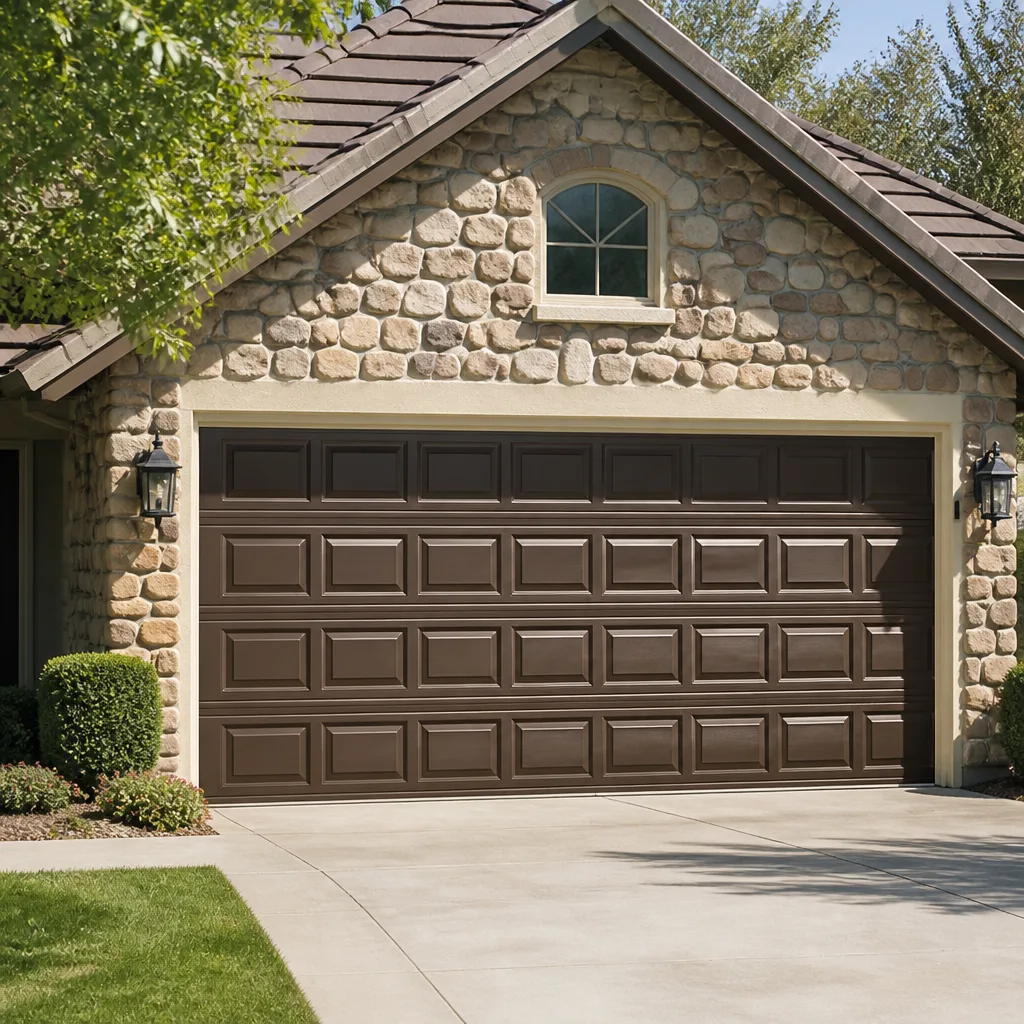 Raised-panel steel
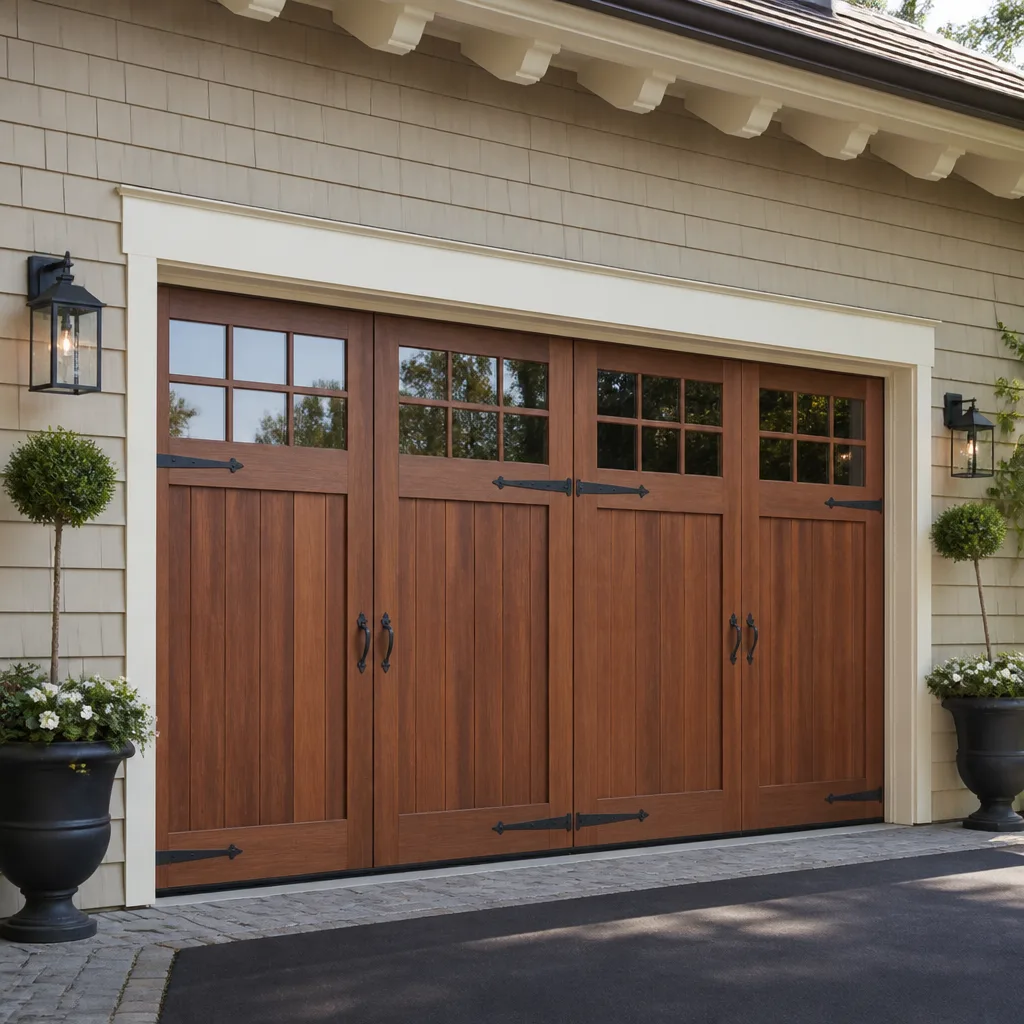 Carriage house
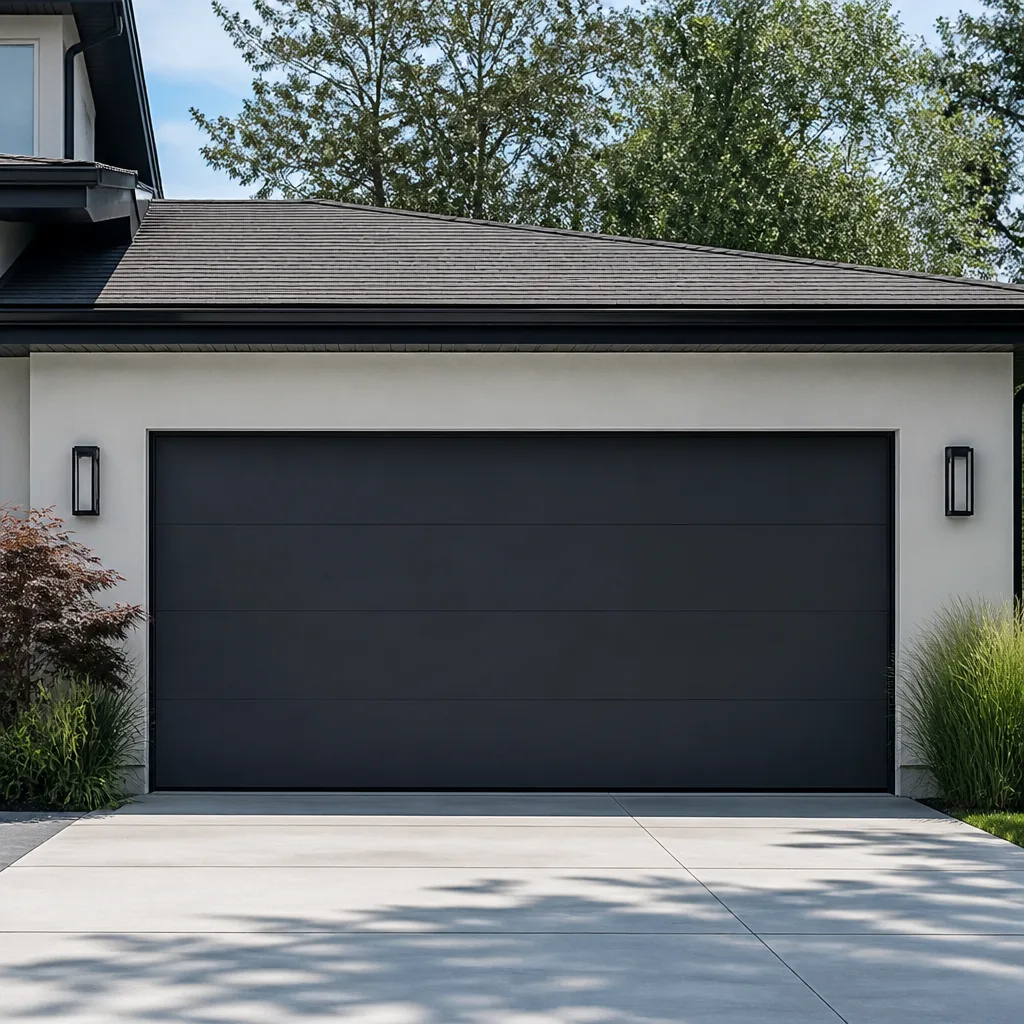 Modern flush
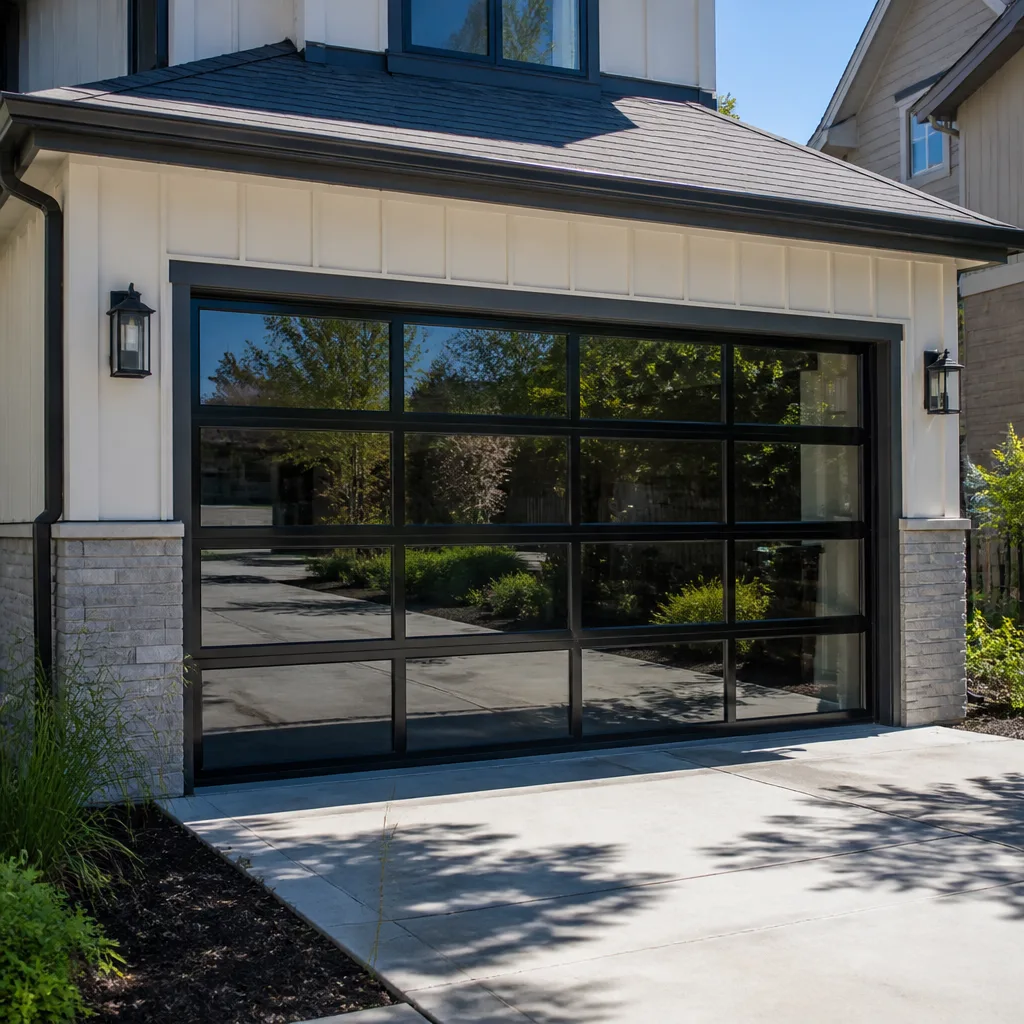 Full-view glass
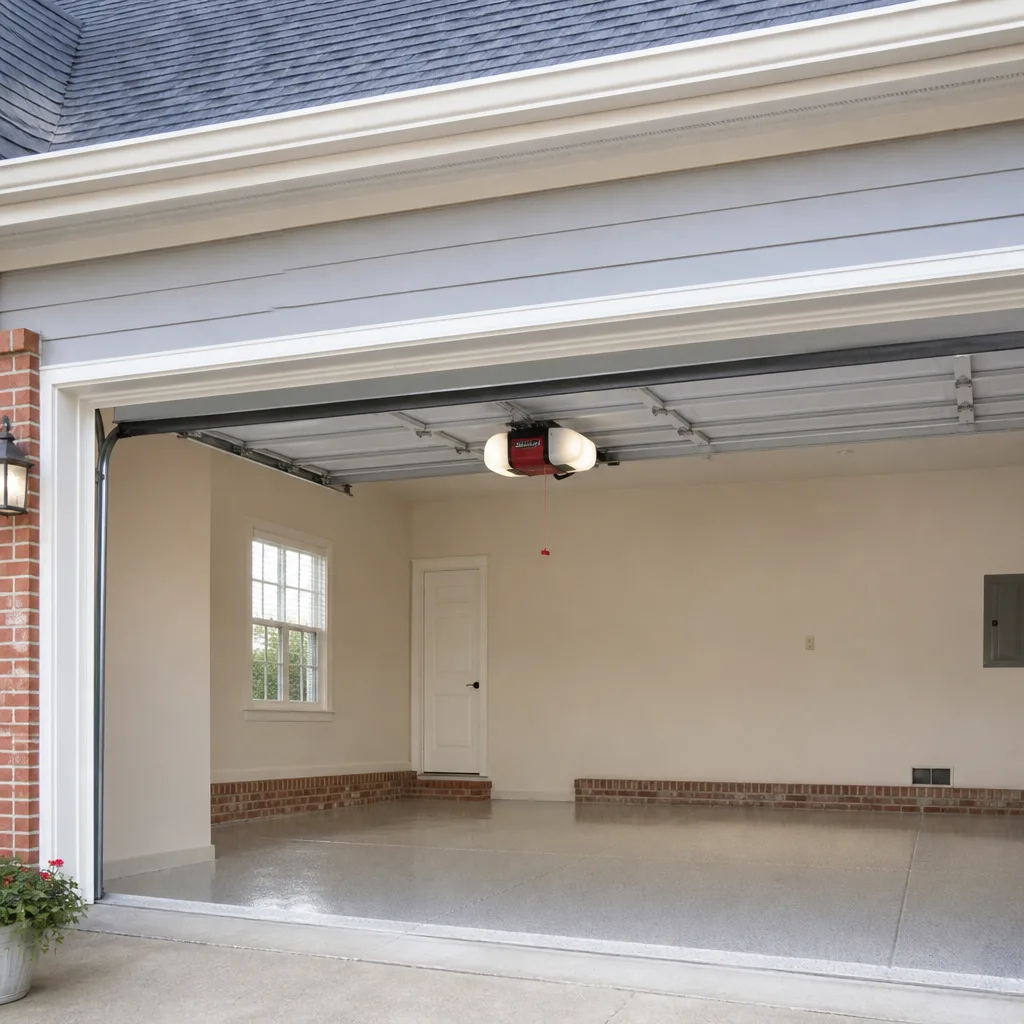 LiftMaster openers
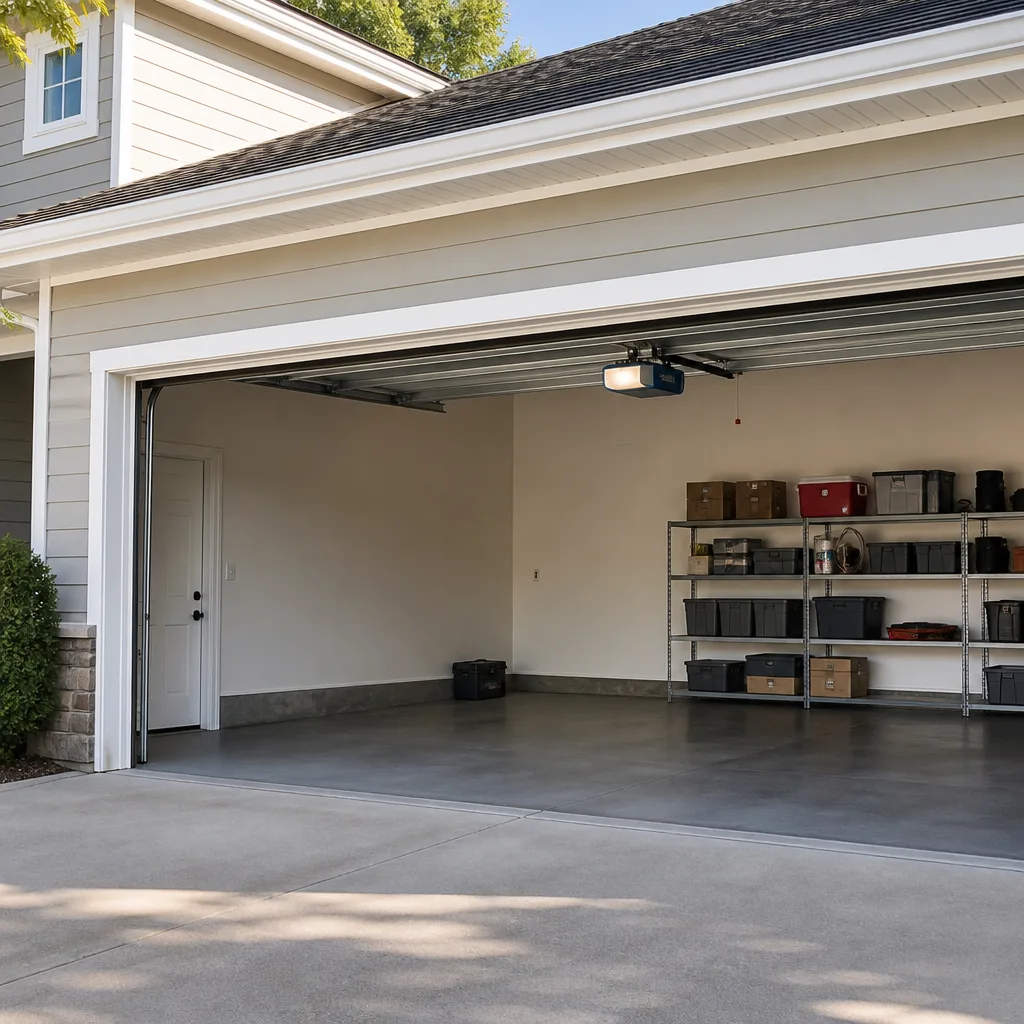 Chamberlain openers
Full 25-point door and opener safety check with every visit - springs, cables, rollers, tracks, and your LiftMaster or Chamberlain opener included
You get a price before we start. It does not change when the truck arrives.
Get your free estimateThe Complete Garage Door Repair Guide for San Marcos Homeowners
The most common call we get from San Marcos homeowners isn’t a broken spring. It’s a door that “just stopped working” after a marine layer week. That points to a completely different diagnosis than what most generic repair articles cover: corrosion on the logic board contacts, swollen weatherstripping grabbing the door edges, or a sensor pair knocked out of alignment by temperature flex. This guide maps every repair decision to the actual conditions, hardware generations, and home styles found in San Marcos zip codes, and complements our The Complete Guide to Garage Door in San Marcos. You’ll learn what fails and why, what you can handle yourself, what needs a technician, and how to price repairs against replacement without getting upsold.
Quick Answer
Garage door repair in San Marcos typically costs between $125 and $450 depending on the failed component, with spring replacement running $180 to $340 and opener repair $150 to $400. Most repairs can be completed the same day by a specialist who carries brand-specific parts on the truck. This guide explains how to diagnose the problem yourself, what San Marcos-specific factors accelerate failures, and when repair pencils out better than replacement.
Styles & brands we work with
Table of Contents
- How San Marcos Climate Accelerates Garage Door Failure
- Mapping Symptoms to Specific Components
- What San Marcos Homeowners Can Safely Do Themselves
- What Requires a Licensed Technician Under California Law
- HOA Constraints and Panel Matching in San Elijo Hills and Twin Oaks
- What Garage Door Repairs Actually Cost in San Marcos
- When Repair Costs Cross the Replacement Threshold
- Common Mistakes to Avoid
How San Marcos Climate Accelerates Garage Door Failure
San Marcos sits in a microclimate that treats garage door hardware differently than Escondido six miles east or Carlsbad six miles west. The marine layer that rolls up the San Marcos Creek corridor brings sustained humidity without much actual rain. That means metal components don’t get rinsed; they get damp and stay damp. Torsion springs on coastal-facing slopes in San Elijo Hills routinely show surface rust at the four-year mark, while identical springs installed inland in Discovery Hills might run six or seven years before corrosion becomes structural. We’ve pulled springs from Santa Fe Hills homes that looked fine on the outside and were pitted to half their original thickness under the coating.
Salt air compounds the problem. San Marcos isn’t directly on the coast, but the prevailing westerly flow carries enough marine aerosol to accelerate galvanic corrosion where dissimilar metals meet: galvanized hinges against aluminum stiles, steel cables against steel drums, zinc-plated brackets against raw spring steel. The failures we see repeat with enough regularity that we can almost map them to neighborhood exposure.
What We See Most Often in San Marcos Zip Codes
- Cable fraying near the bottom fixture: The cable wraps around a steel drum that stays damp during marine layer weeks. Moisture wicks into the cable strands and rust forms inside the wrap before it shows on the outside. A cable that looks acceptable on visual inspection can snap a week later.
- Torsion spring surface rust with internal pitting: The oil coating on residential springs is thin. Coastal humidity penetrates it within a few years. Internal pitting isn’t visible until the spring breaks, which is why San Marcos spring failures often happen at year three or four instead of the seven-to-ten-year lifespan inland installers quote.
- Logic board corrosion on openers: The circuit boards in openers made before roughly 2015 didn’t have conformal coating. Condensation during marine layer weeks can cause enough surface corrosion on the traces to produce intermittent failures. The opener works, then doesn’t, then works again. Replacing the board often fixes it, and the newer boards are sealed.
- Bottom seal compression set: Rubber seals absorb moisture and lose their ability to rebound. A seal that’s permanently compressed lets leaves, dust, and the occasional lizard into the garage. It also changes the closed-door position enough to make the auto-reverse trigger at random.
The practical takeaway for San Marcos homeowners: inspect your cables and springs twice a year, not once. Look at the bottom fixture where the cable meets the door. If you see any dark discoloration or surface scaling, get a technician to look before the cable lets go. The inspection is cheaper than the emergency call when the door drops crooked at 7 a.m. on a Monday.
Our Garage Door Repair services technicians work on these failures every week. Garage doors are all we do, so we stock the specific cables, springs, and boards that match the systems installed in the housing tracts in this area. You don’t wait on a part order when the diagnosis is a corroded cable on a Wayne Dalton door or a failed logic board on a Chamberlain opener.
Mapping Symptoms to Specific Components
Every garage door symptom points to a specific component, and knowing the difference saves you from paying for a wrong diagnosis. Here’s how to map what you’re hearing and seeing to what’s actually failed.
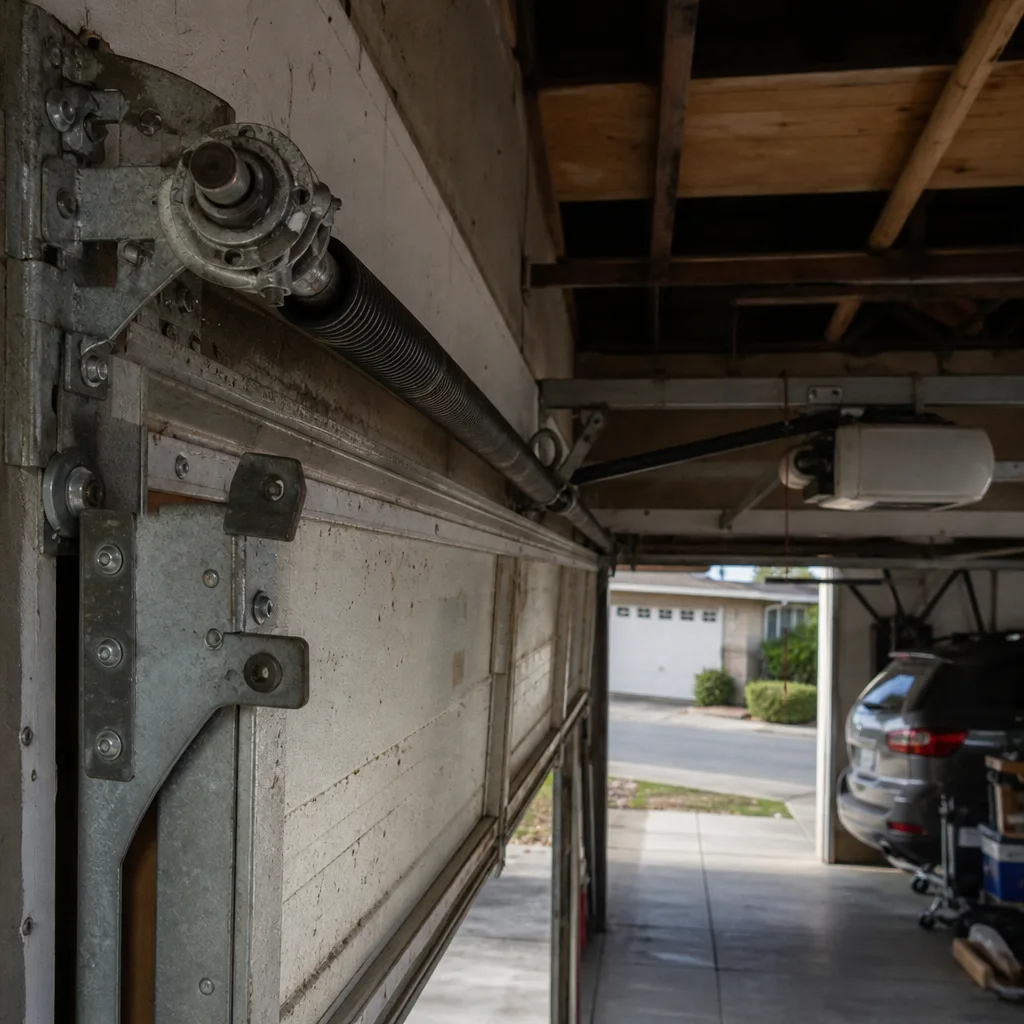
- Door won’t open at all, opener motor hums for a second then stops: This is a broken torsion spring in most cases. The opener can’t overcome the dead weight of the door without the spring’s counterbalance. You’ll often hear a loud bang from inside the garage when the spring snaps. If you look at the torsion tube above the center of the door, you’ll see a visible gap in the spring coil.
- Door opens a few inches, then jerks to a stop with the motor still running: A snapped or derailed cable on one side. The door tilts slightly and the safety mechanisms or the physical binding stops the travel. Look at both sides of the door near the bottom: one cable will be slack or hanging loose while the other is still taut.
- Opener runs, but the door doesn’t move, and you hear grinding from the motor housing: The drive gear inside the opener is stripped. This is common on openers five to eight years old, especially if the door’s spring has been weakening and the opener has been working harder every cycle. The gear is plastic, and once the teeth shear, the motor spins but transfers no force.
- Door reverses immediately after touching the floor, or stops halfway down: The safety sensors are misaligned, or the close-force limit needs adjustment. Temperature swings in San Marcos move the metal tracks slightly, and sensor brackets that were aligned in July can be out of position in January. The fix is often a manual realignment, not a new sensor.
- Door opens fine but makes a scraping or squealing noise during travel: Worn rollers or dry roller bearings. Rollers are a wear item; the nylon rollers common in newer homes are quieter but the nylon wears down to the steel bearing housing. Replacing rollers is a routine service item, not a structural repair.
- Door closes too hard and bounces back up: The close-force limit is set too high, or the bottom seal has been compressed to the point where the door reads the floor contact incorrectly. This is a limit adjustment on the opener, not a spring problem.
One more San Marcos-specific symptom: a door that squeaks for a month, then suddenly works fine after a rain, then squeaks again. That’s rust breaking loose and re-forming on the torsion spring. The noise isn’t the problem; it’s the warning sign. A spring that’s rust-pitted enough to squeak is close enough to failure that you should schedule a replacement before it snaps.
If you’ve gone through this list and you’re still guessing, call us at San Marcos Garage Door Service home. We’d rather spend ten minutes on the phone helping you diagnose over a description than send a truck for a limit adjustment you can do yourself. That’s the straight-talking approach.
What San Marcos Homeowners Can Safely Do Themselves
Some garage door maintenance tasks are genuinely DIY-friendly, and we’ll tell you that directly. Money spent on a service call for something you can fix in ten minutes is money wasted. Here’s what’s safe to tackle with basic tools and a little patience.
- Lubrication: Use a silicone-based lubricant or white lithium grease on the torsion spring, hinges, and roller bearings. Spray the spring coils lightly, not heavily. Do this every six months, more often if you notice noise. The goal is a light film, not a dripping coat. Never use WD-40 on springs; it strips what protective coating remains.
- Sensor alignment: If the opener’s safety sensors are misaligned, loosen the wing nut on the sensor bracket, adjust the sensor until the indicator light goes solid, then retighten. Test the door. This takes five minutes and costs nothing.
- Close-force limit adjustment: Most openers have two dials or buttons labeled “up force” and “down force” on the motor unit. If your door bounces off the floor or reverses before closing, turn the down-force dial slightly down and test. Make small adjustments, one increment at a time. The door should close firmly but not slam.
- Weatherstripping replacement: The rubber seal on the bottom of the door slides into a metal retainer channel. You can pull the old one out and slide a new one in. This is a fifteen-minute job that improves the seal against San Marcos temperature swings and keeps critters out.
- Track cleaning: Wipe the vertical tracks with a dry rag to remove dust and debris. Do not lubricate the tracks; the rollers should ride on clean metal, and lubricant just attracts dirt.
- Battery replacement in remotes and keypads: This is the first thing to check when a remote stops working. The keypads on LiftMaster and Chamberlain systems use standard 9-volt or AA batteries depending on the model.
These tasks are safe because they don’t involve working under tensioned components. They’re the same items we cover when a homeowner calls and asks us to talk them through an easy fix over the phone.
One caution related to San Marcos specifically: if your garage door faces west or south, the track hardware gets more direct sun and thermal expansion. You may find that bolts work loose more often than on doors facing other directions. Checking and snugging track bolts with a socket wrench is a reasonable DIY task. Just don’t touch anything connected to the spring system.
What Requires a Licensed Technician Under California Law
There’s a line between maintenance and repair, and crossing it without proper training is genuinely dangerous. California does not have a specific “garage door repair license” separate from the general contractor classification, but any repair involving the mechanical load-bearing components of a garage door legally requires work to be performed by someone with the proper contractor’s license and the right insurance. More importantly, it requires the right training.
Torsion springs: These springs are under enormous tension. The steel rod running through the center is the only thing preventing the spring from unwinding violently when it’s being adjusted. A torsion spring that breaks under load releases energy equivalent to a small explosion. People have been killed or seriously injured by attempting spring replacement without the proper winding bars and techniques. This is not a DIY repair, period. We will not give step-by-step instructions for spring replacement, and neither should any reputable guide.
Extension springs and cables: The cables that run along the sides of the door carry the entire weight of the door when the spring breaks. Servicing cables requires releasing the remaining spring tension, which requires knowing exactly how the system is loaded. A cable that snaps while under tension hits with enough force to break bone.
Bottom fixture replacement: The brackets at the bottom corners of the door hold the cable ends and take full tension during every cycle. Replacing them requires detaching the cable and re-tensioning the entire assembly.
Opener replacement or significant opener repair: Any work involving the opener’s gear train, motor, or the force settings that keep the door from crushing objects in its path should be done by someone who understands the manufacturer’s calibration. A mis-set force limit is a safety hazard for children and pets.
Track and panel structural repair: If a door has come off its tracks or panels are severely dented, the entire weight-bearing structure needs to be assessed. This isn’t a cosmetic fix.
The honest guidance San Marcos homeowners need: springs, cables, bottom fixtures, and structural track work require a trained technician. This is exactly the kind of work we do every day, and it’s the reason a specialist who does only garage doors carries the specific winding bars, cable clamps, and tension gauges for each spring type. A general handyman with a crescent wrench doesn’t.
HOA Constraints and Panel Matching in San Elijo Hills and Twin Oaks
If you live in San Marcos under an HOA, and most homeowners in San Elijo Hills, Twin Oaks, and the newer developments do, replacing a damaged panel isn’t a simple trip to the home center. Many of these communities have architectural guidelines that require garage door colors and finishes to match within the neighborhood palette. That constrains what you can install, and it makes matching an existing door harder than most people expect.
Panel matching works like this: a garage door’s color isn’t just a paint code. It’s a specific embossing pattern, a specific material (steel gauge, wood composite, aluminum), and a specific finish (smooth, woodgrain, stamped shake). When you replace one panel on a door that’s been in service for six years, the new panel will not match the old one, even if it’s the same model. Sun exposure and weathering change the color slightly. The panel on the south-facing side of a San Marcos door fades faster than the north-facing side, and there’s no way to re-fade a new panel to match.
Options that actually work:
- Paint the entire door: This is the most common solution when matching one panel isn’t feasible. The HOA may require a specific color from their approved palette. A professional can paint all panels to a uniform finish that satisfies the architectural committee.
- Order a custom-matched panel from the manufacturer: Some manufacturers can produce a panel with the same base color and then a professional can tint or weather it to blend. This is an art, not a science, and results vary.
- Replace the entire door section: On a two-car door that’s usually four panels, replacing the entire section that contains the damaged panel preserves consistency between sections. It costs more than a single panel but avoids the patchwork look.
- Replace the full door: When the door is over twelve years old and panels are starting to rust at the bottom seams, a full replacement often pencils out. More on that in the cost section.
If your HOA has finish requirements, get the architectural guideline in writing before ordering any panel. The HOA’s approval process can add a week or two to the timeline. We’ve worked with enough San Marcos HOAs to help you navigate the paperwork, and we always recommend submitting the exact color and finish specifications for approval before the panel is ordered. That prevents a very expensive redo.
What Garage Door Repairs Actually Cost in San Marcos
Here’s what we see as the real market prices for garage door repairs in San Marcos, based on the work we do every week. These are not theoretical ranges from a national article; they reflect the labor rates, part availability, and service patterns in this area. Every price we quote is agreed before any work starts, and the price you agree to is the price you pay.
| Repair Type | Typical Cost Range in San Marcos | Time on Site |
|---|---|---|
| Single torsion spring replacement | $180 – $290 | 45 – 90 minutes |
| Double torsion spring replacement | $280 – $400 | 90 minutes – 2 hours |
| Extension spring pair replacement | $150 – $250 | 45 – 60 minutes |
| Cable replacement (both sides) | $130 – $220 | 30 – 60 minutes |
| Opener drive gear replacement | $150 – $250 | 45 – 60 minutes |
| Logic board replacement (sealed) | $180 – $320 | 30 – 45 minutes |
| Roller replacement (all rollers) | $120 – $180 | 30 – 45 minutes |
| Safety sensor replacement or realignment | $85 – $150 | 15 – 30 minutes |
| Bottom seal replacement | $70 – $120 | 15 – 20 minutes |
| Track repair or realignment | $100 – $250 | 30 – 90 minutes |
These are the costs for parts and labor combined. The variance depends on the specific door: a two-spring system on a 16-foot door costs more than a single spring on an 8-foot door. A Wayne Dalton door with a TorqueMaster spring system takes longer to service than a standard torsion setup. A Clopay door with heavier gauge steel panels requires springs with a higher cycle rating, and those cost more.
Emergency calls after hours or on weekends add a trip fee in most cases. Same-day service during normal business hours usually doesn’t. This is worth asking about before you book: “Is there a trip fee if you come out today?” We quote trip fees upfront when they apply, and there’s no charge if you decide not to proceed after the diagnosis.
For a side-by-side comparison on what other San Marcos repair companies charge, you might check Garage Door Repair in San Clemente or Garage Door Opener Repair in San Clemente. The coastal San Diego market has consistent pricing across similar zip codes.
When Repair Costs Cross the Replacement Threshold
Every repair has a point where the money is better spent on a new door. The calculation is different in San Marcos than it is in, say, Arizona, because humidity shortens component life and HOA constraints add replacement costs. Here’s the decision framework we use with our own customers.
The 50% rule, with local adjustment: The standard advice is that if a repair costs more than 50% of the door’s replacement value, replace the door. We think that’s too aggressive for San Marcos. A $280 spring replacement on a $3,000 door is 9% of replacement cost. That same $280 spring on a 14-year-old builder-grade door that originally cost $600 is 47%, and the door has rust at the bottom seams and two dented panels. Now replacement looks better.
Here’s the honest math:
- Door age under 10 years, single-point failure: Repair it. A broken spring or a snapped cable on a door that’s otherwise sound is a routine repair. You’ll realistically get another five to eight years from the door.
- Door age 10 to 15 years, multi-component failure: Run the numbers. If you need springs, rollers, and a new opener logic board, you’re at $500 in repairs on a door with visible wear. You could instead get a full new door installed for $1,200 to $1,800 depending on the size and finish. The new door comes with a fresh warranty, new springs, new hardware, and a better bottom seal.
- Door age over 15 years, any significant repair: Strongly consider replacement. The springs you’re replacing are the original ones; the next failure is already on the calendar. Panels rust at the bottom seams in San Marcos humidity, and HOA repainting requirements may force a full-finish refresh anyway.
- Your long-term plan matters: If you’re staying in the home for five more years, a new door adds to the sale appeal and avoids the awkward conversation with the buyer’s inspector about the rusted track. If you’re selling in six months and the door works, patch it and disclose it.
For a full picture of what installation costs look like in this area, see Garage Door Installation in San Clemente. The pricing structure mirrors San Marcos closely.
Common Mistakes to Avoid
- Ignoring a noisy spring for months. Squealing or popping from the spring is rust breaking loose and re-forming. The noise stops when the spring snaps. Replace it at the noise stage, not the broken stage.
- Lubricating the wrong way. Spraying the tracks with grease attracts sand and dust, which grinds down the rollers. Lube the rollers and springs, not the track surface.
- Doing a spring repair without the correct winding bars. Substituting screwdrivers or pry bars for the proper winding bars is how people get seriously hurt. Never work on a torsion spring without the correct tools and training.
- Buying a generic “universal” part online. Garage door hardware isn’t universal. A spring that’s the wrong wire gauge or inside diameter changes the balance of the door and wears out the opener motor prematurely. The right part for your system comes from matching the manufacturer’s specs, not the cheapest Amazon listing.
- Adjusting force limits too aggressively. Crank the close-force up to fix a door that’s binding, and you override the safety reverse. That’s a child-and-pet safety issue, not a tuning preference.
- Skipping HOA approval on panel replacement. The HOA won’t fine you for a door that matches. Installing a mismatched panel and hoping nobody notices is a gamble that loses in San Elijo Hills and Twin Oaks.
- Replacing the opener when the spring is the problem. A door that’s heavy because the spring is weak or broken burns out opener motors. If the opener hums but the door won’t lift, check the spring before condemning the opener. This is the most common unnecessary opener replacement we see.
See the difference
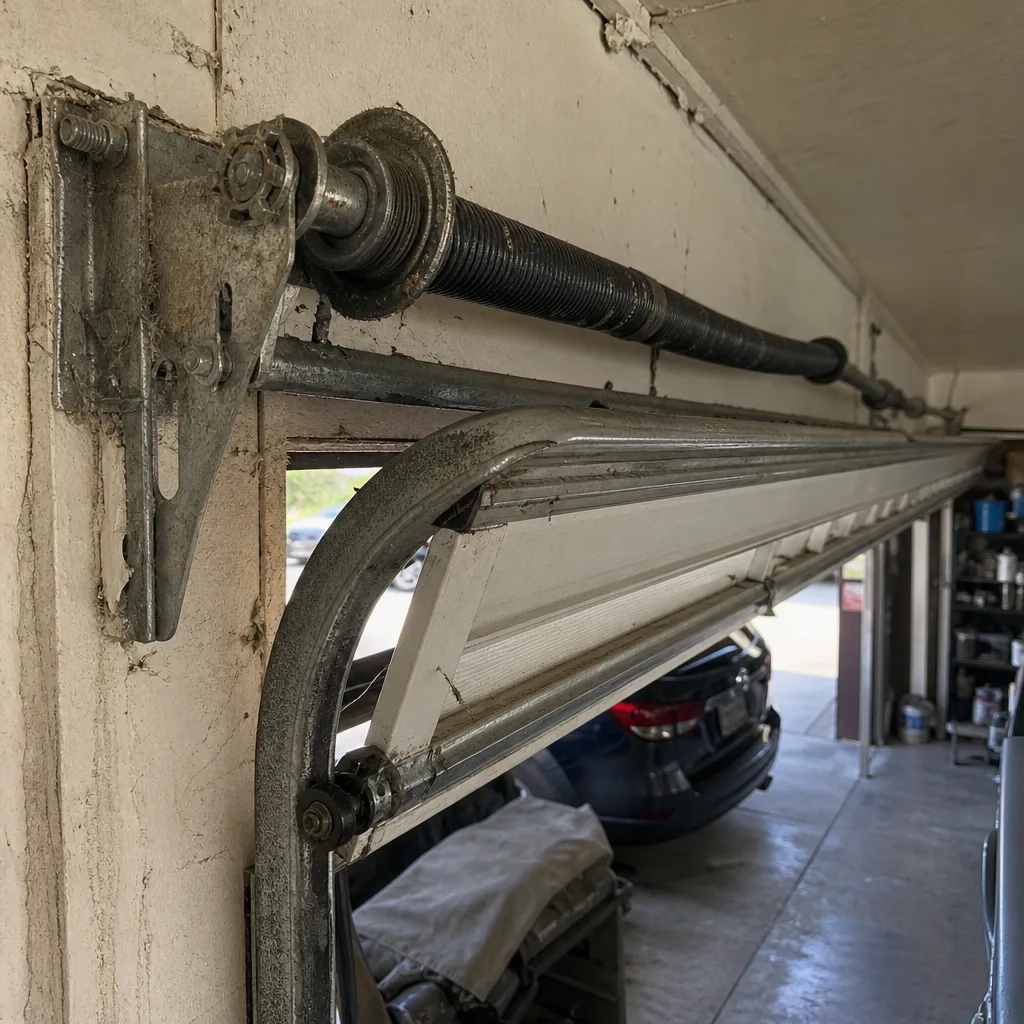
 Before
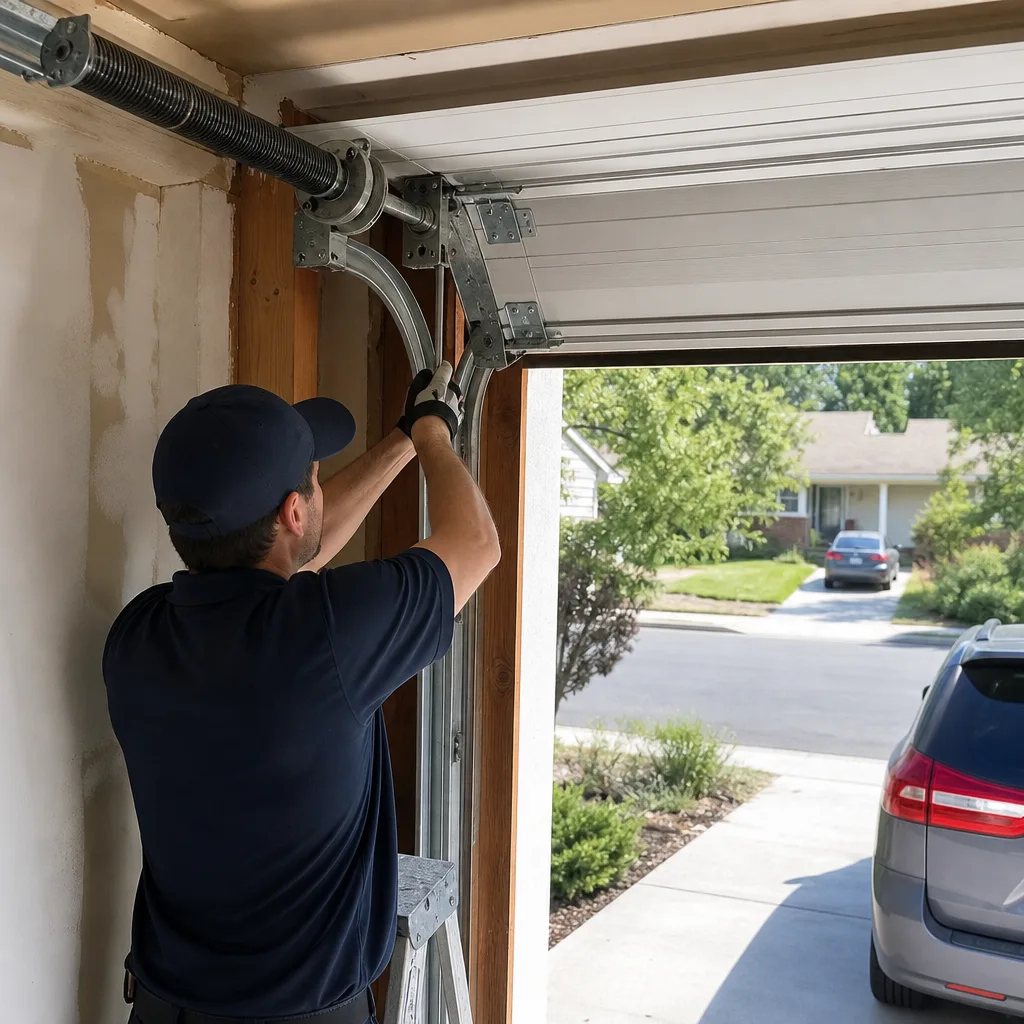 After
 Before
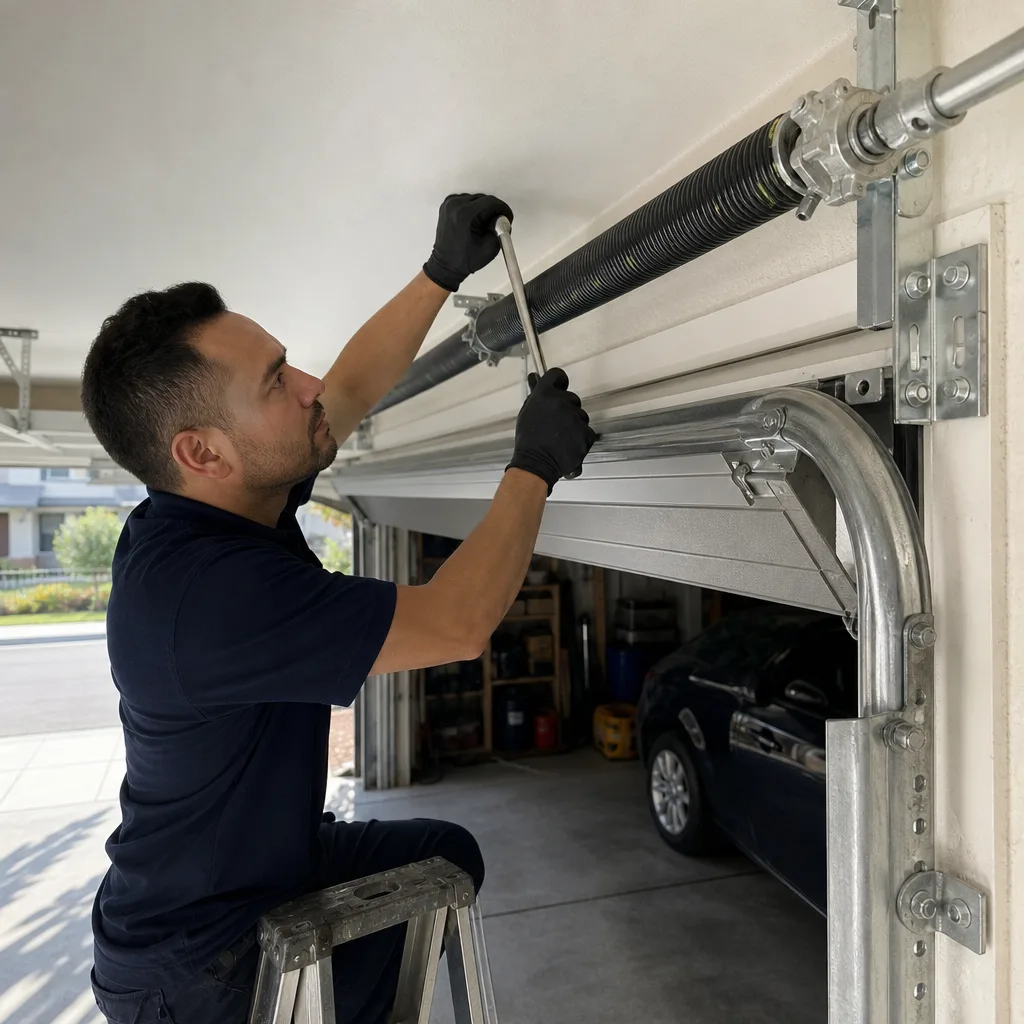 After
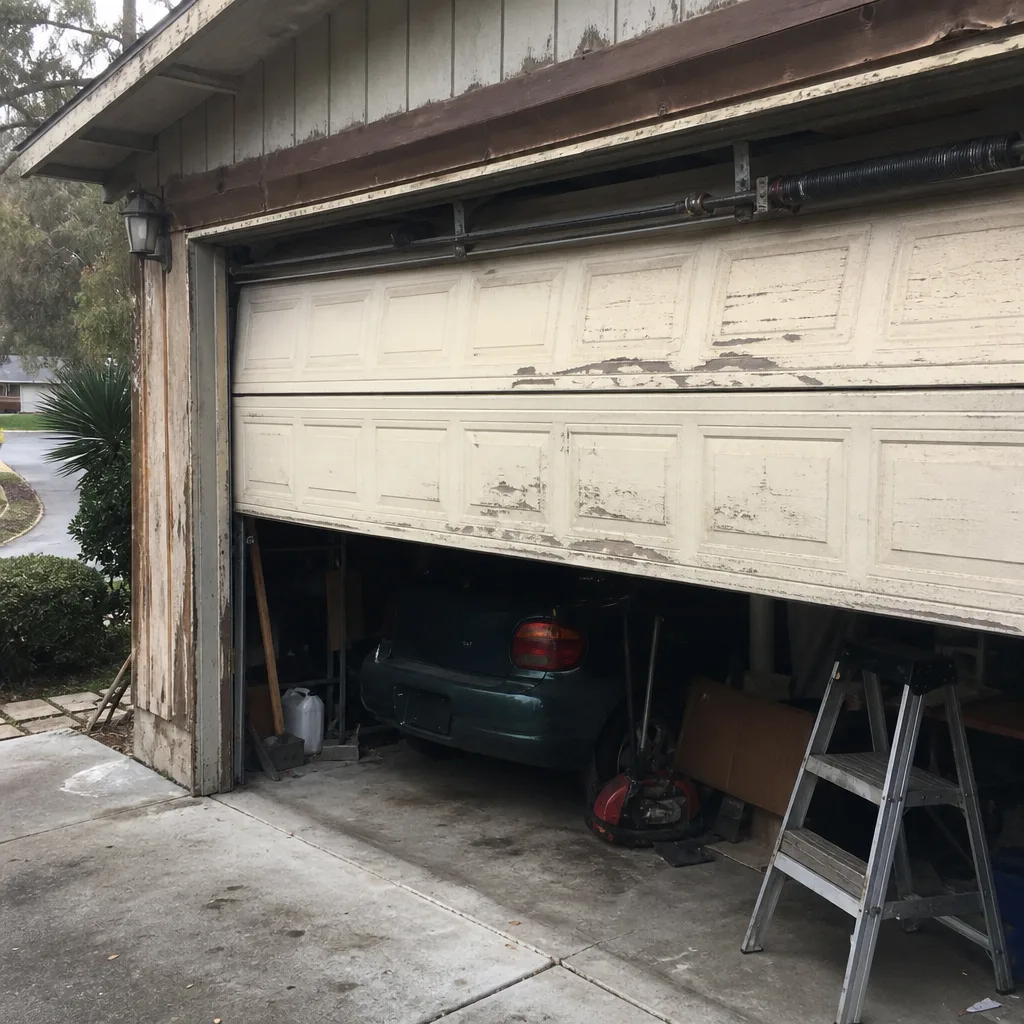 Before
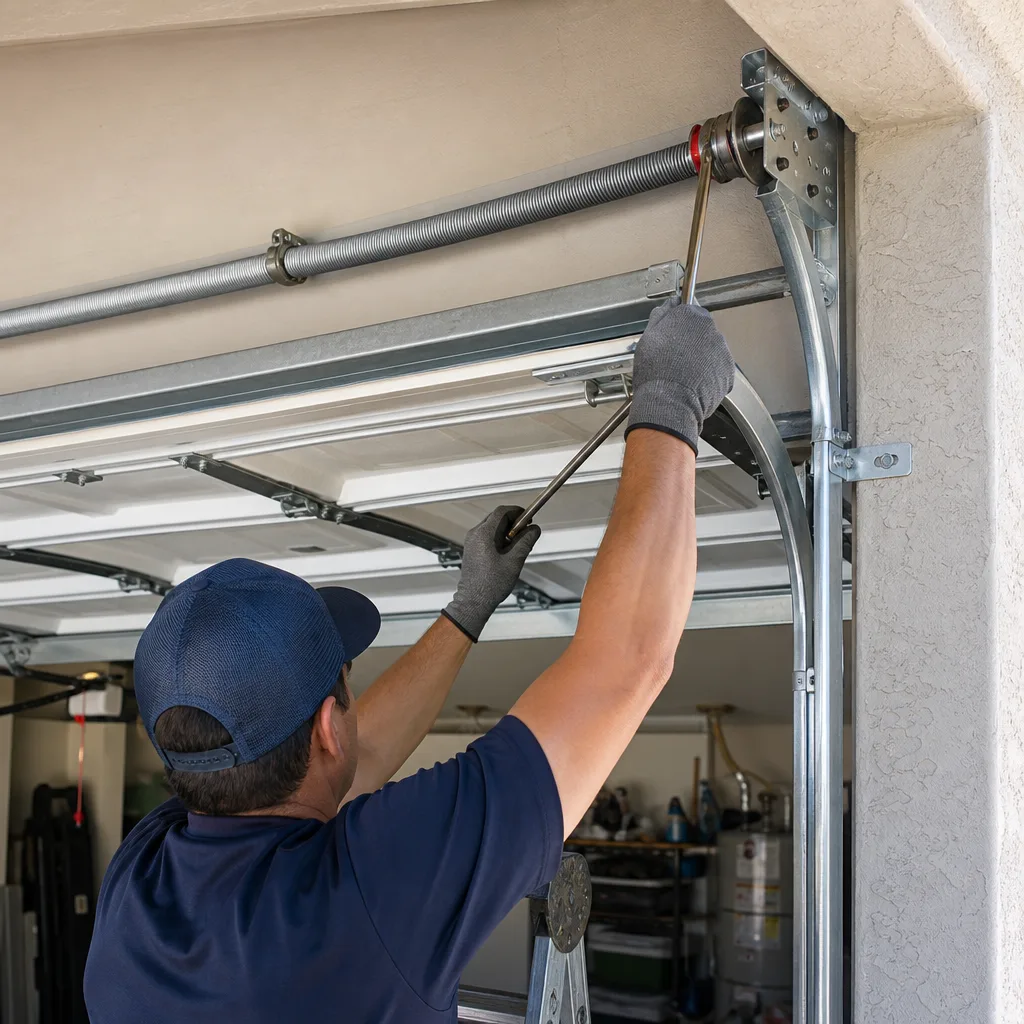 After
When to Call a Professional
Call a technician if you have a broken spring, a snapped or derailed cable, a bottom fixture that’s loose, any panel that’s come off the track, or an opener that’s not responding to wall button or remote commands after you’ve checked the batteries and the breaker. These are mechanical and electrical failures that require a trained specialist with the correct tools and parts on hand. Trying to muscle through a spring replacement or a cable re-tension without proper knowledge risks serious injury. San Marcos Garage Door Service offers free estimates in San Marcos. Call (877) 265-5166 and we’ll give you an honest assessment, a firm price before any work begins, and same-day service on most repairs.
Frequently Asked Questions
Most repairs in San Marcos run between $125 and $450, with spring replacement at $180 to $340 and opener repairs at $150 to $400. The final cost depends on your door’s brand, spring type, and panel size. Call (877) 265-5166 for an exact quote before any work begins.
Yes, most repairs are same-day service. We stock springs, cables, rollers, and opener parts for LiftMaster, Chamberlain, Genie, and Clopay systems on our trucks, so the diagnosis and the fix usually happen in one visit. Emergency calls after hours are scheduled based on availability.
No. The price we quote you before work begins is the price you pay. If we find an unexpected secondary issue during the repair, we’ll show you what we found and quote that separately before doing anything else. You approve every charge before we make it.
We carry the common parts on the truck: torsion springs in multiple wire gauges and inside diameters, extension springs, cables, bottom fixtures, rollers, hinges, safety sensors, and drive gears. For unusual configurations, especially older Wayne Dalton TorqueMaster systems, we may need to order the exact part from the manufacturer. We’ll tell you that upfront, not after we’ve disassembled your door.
Twice a year. The marine layer humidity and salt air in San Marcos deteriorate springs and cables faster than inland climates. A spring that would last eight years in Poway might break at five in San Elijo Hills. Inspections catch rust and wear before the component fails.
That depends on the door’s age and overall condition. Under ten years old with no rust or panel damage, repair the spring. Over fifteen years old with rusted bottom seams and worn rollers, replacement often pencils out better. We’ll give you an honest cost comparison rather than pushing a replacement.
The Bottom Line
San Marcos garage doors fail on a different timeline than the national average because of marine layer humidity, salt air, and temperature swings. Knowing which symptom maps to which component lets you make informed repair decisions instead of guessing. Some maintenance is safely DIY; anything involving springs, cables, or tensioned hardware is not. HOA communities add finish constraints that complicate panel replacement, and the repair-versus-replace threshold depends on your door’s age and condition. When you need a repair, get a firm price before work starts, ask about same-day service, and work with a specialist who services your specific brand. For more guides & resources, visit our blog. Call (877) 265-5166 for a free estimate in San Marcos.
Written by the team at San Marcos Garage Door Service, serving San Marcos since 2012.