
Last updated October 31, 2026
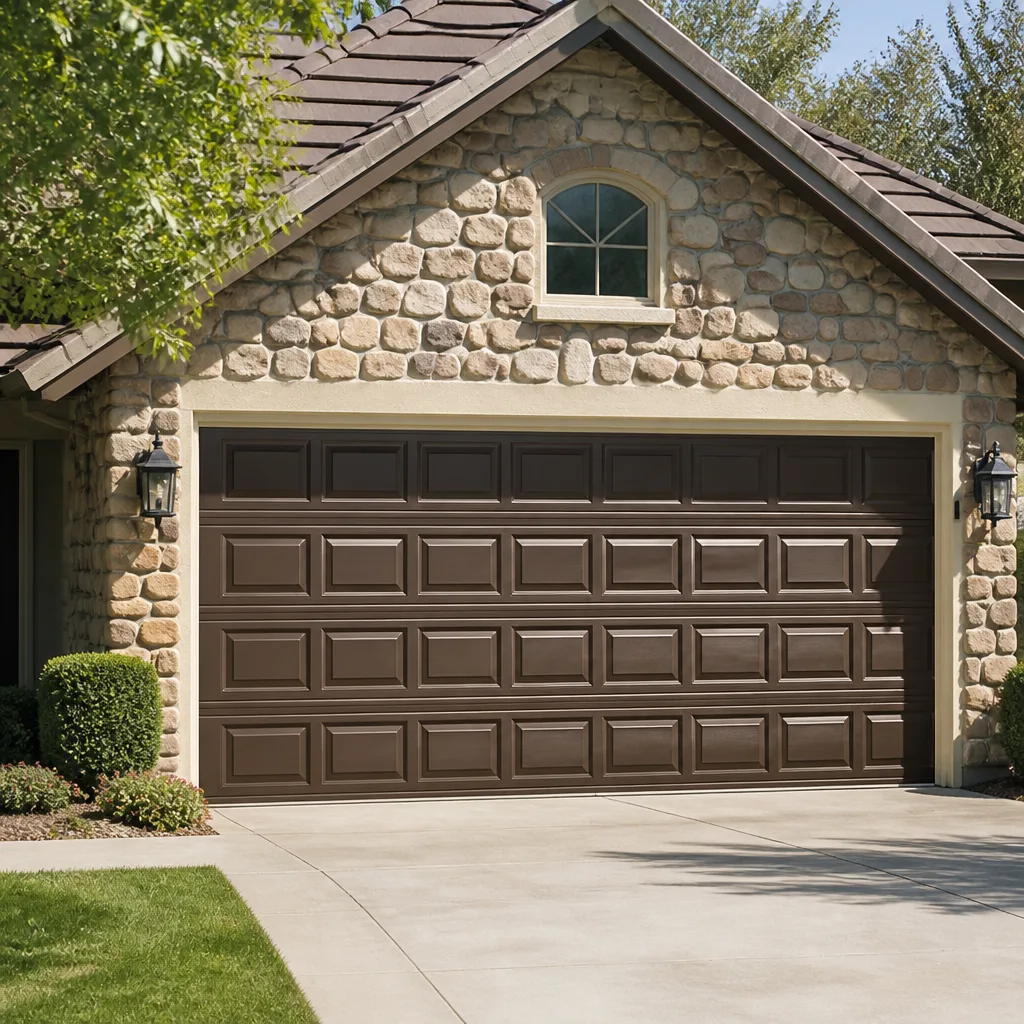 Raised-panel steel
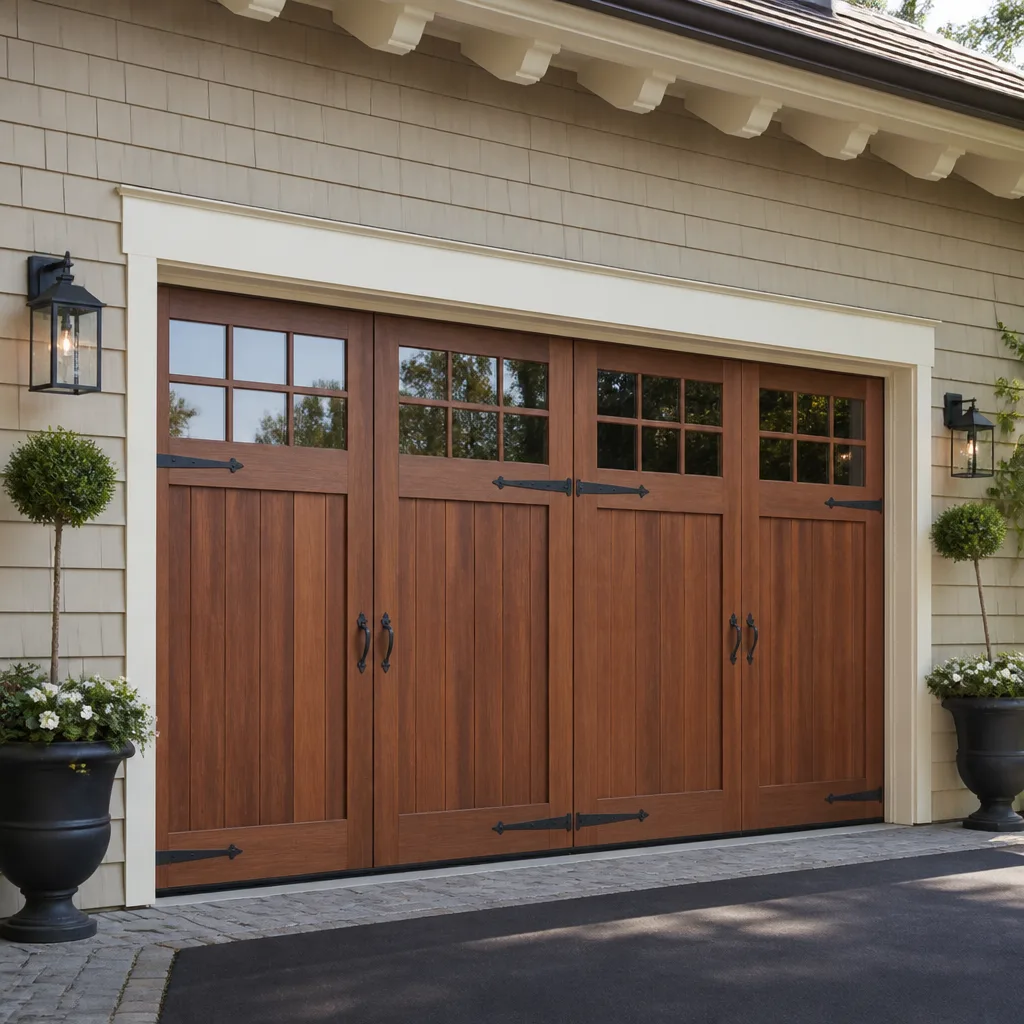 Carriage house
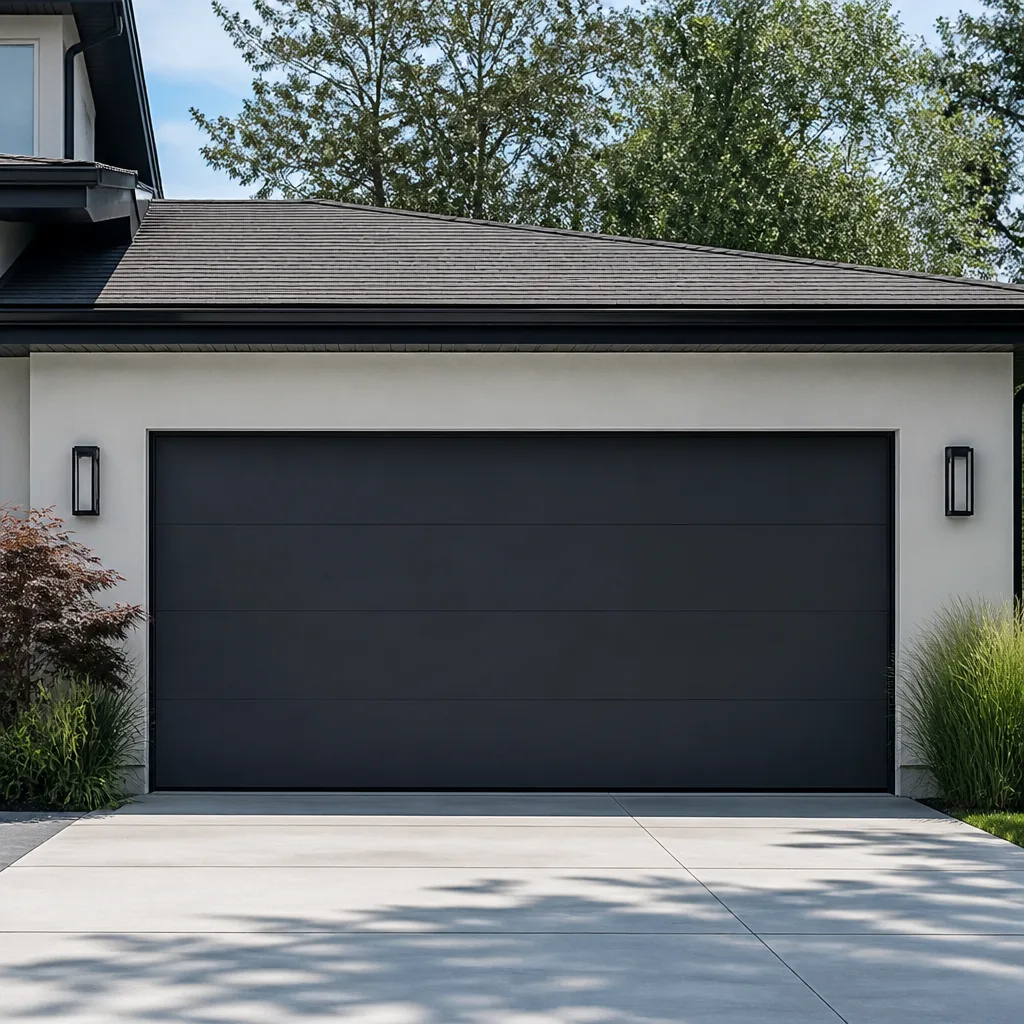 Modern flush
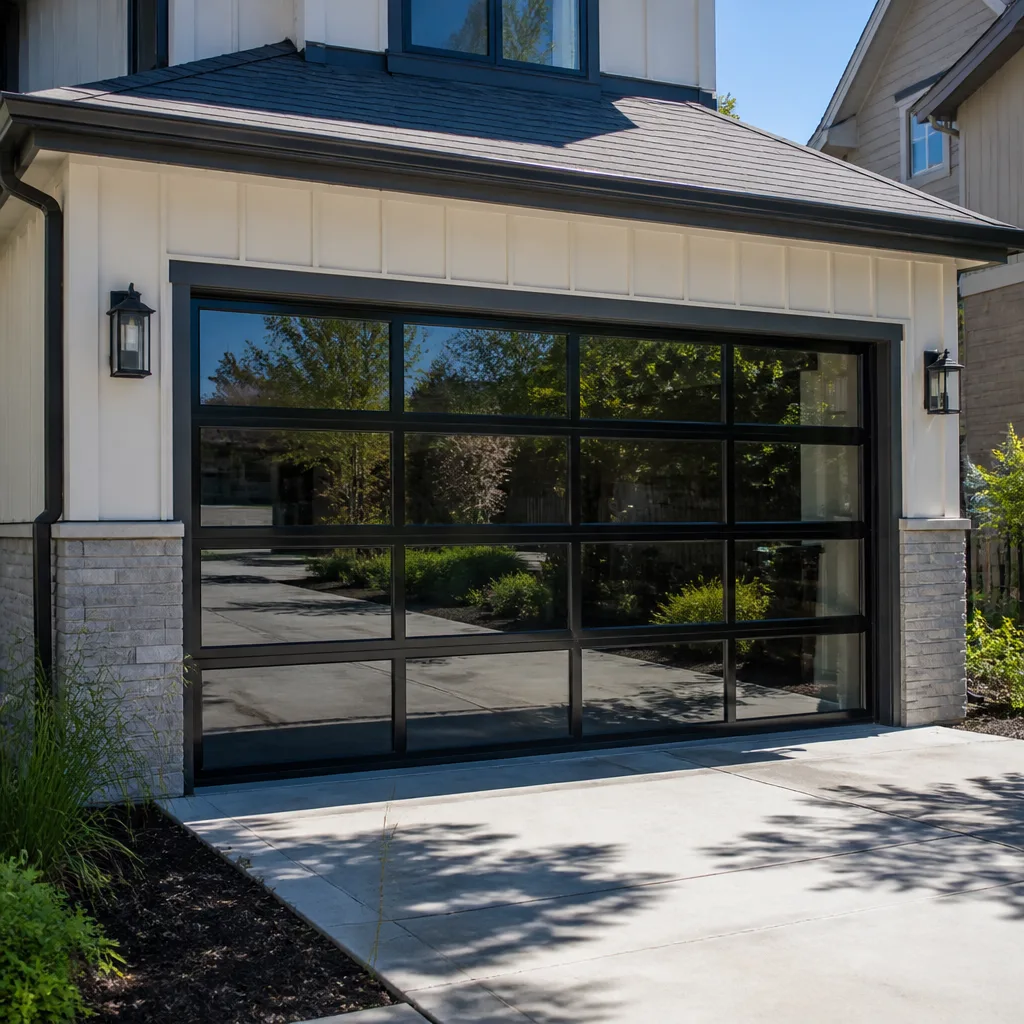 Full-view glass
 LiftMaster openers
 Chamberlain openers
Full 25-point door and opener safety check with every visit - springs, cables, rollers, tracks, and your LiftMaster or Chamberlain opener included
You get a price before we start. It does not change when the truck arrives.
Get your free estimateGarage Door Warning Signs: A San Marcos Homeowner’s Reference Guide
The door that “just needs a little extra pull to close” has a broken or binding cable. The opener that “hesitates before moving” has a spring that’s lost tension. Neither of these is a quirk, and neither will fix itself. Every garage door failure announces itself weeks before it happens. The problem is that most San Marcos homeowners interpret these signals as personality traits of an aging door rather than mechanical distress calls. This guide pairs each observable symptom with the specific component causing it and the realistic consequence of ignoring it, so you can make an informed call instead of waiting for a complete failure that locks your car inside the garage at 7:15 on a Tuesday morning. For How to Hire a Garage Door Contractor in San Marcos: A Step-by-Step Guide, see our companion resource.
Styles & brands we work with
Quick Answer
Garage door warning signs that signal repair is needed include grinding noises (bad rollers or hinges), a bang sound (spring failure), uneven lifting (cable or spring imbalance), jerky travel (track misalignment or worn rollers), sagging corners (tension loss), and an opener that runs while the door stays put (broken spring or disengaged carriage). Any of these symptoms means a component has already failed or is failing. In San Marcos, where salt air accelerates corrosion on metal parts, catching these signs early typically means a $150 to $300 repair instead of a $600 to $1,400 replacement job.
Table of Contents
- Sound Diagnostics: What Your Garage Door Is Telling You
- Movement Warning Signs: Reading the Door’s Behavior
- Visual Warning Signs on Springs: What to Look For Before Failure
- Opener Behavior as a Diagnostic Tool
- The San Marcos Accelerator: Salt Corrosion on Cables and Brackets
- The Warning Sign Timeline: How Long You Actually Have
- Common Mistakes to Avoid
- When to Call a Professional
- Frequently Asked Questions
- The Bottom Line
Sound Diagnostics: What Your Garage Door Is Telling You
Garage doors are not quiet machines, but they should not sound like they’re in pain. After enough service calls across San Marcos and the surrounding North County area, we can diagnose most problems from the driveway before touching the door. Each noise corresponds to a specific component at a specific stage of failure.
A grinding noise that sounds like metal dragging across metal points to worn rollers or hinges. Rollers should spin. When the ball bearings inside a roller seize up, the wheel slides along the track instead of rolling, producing a grinding sound that gets worse each month. On doors made by Amarr or Wayne Dalton, worn rollers also produce visible metal shavings on the track. Hinges produce a grinding noise when the hinge sleeve wears through, letting metal rub against metal directly.
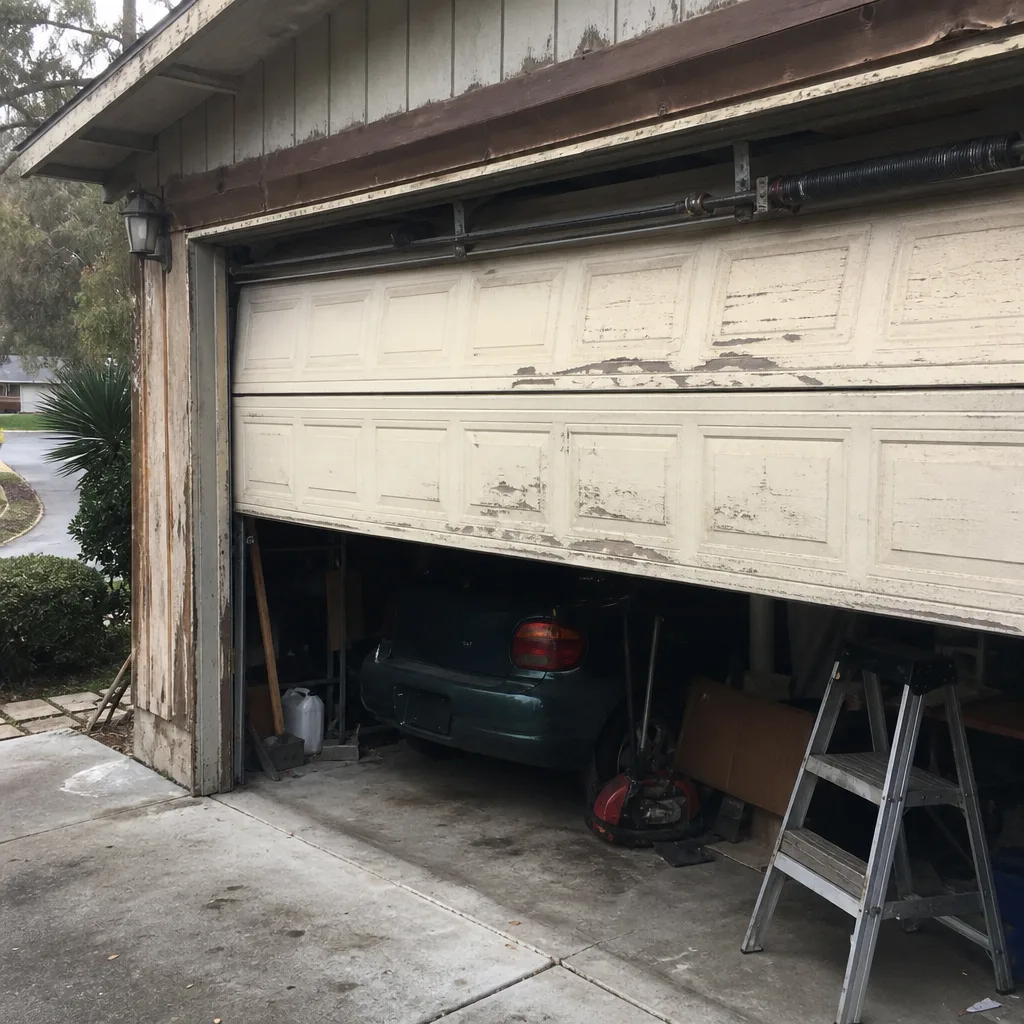
A loud bang, like a gunshot or a car backfiring in your garage, is a torsion spring breaking. This is not subtle. If you hear this and find the door suddenly heavy and unresponsive to the opener, a spring has failed completely. The door will not lift manually, and continuing to run the opener will burn out the motor within a week. This is an immediate repair situation.
A scraping sound, like a nail being dragged across a chalkboard, indicates track misalignment. The edge of the door panel or a bracket is contacting the track at an angle it was never designed to touch. In San Marcos, where temperature swings between coastal mornings and inland heat cause metal to expand and contract daily, track brackets can shift slightly out of alignment over time, especially on older installations.
A motor strain hum – where the opener sounds like it’s working much harder than it used to – is the sound of a spring losing tension. When the torsion spring weakens with age, the opener must lift more of the door’s weight. The motor’s pitch drops and the cycle takes longer. This is the most commonly ignored sound we hear in San Marcos homes, and it always ends the same way: either the spring snaps or the opener’s gear strips.
Movement Warning Signs: Reading the Door’s Behavior
Sound is only half the diagnostic picture. The way a door moves – or refuses to move – tells you exactly which subsystem is failing.
Uneven lift happens when one side of the door rises faster than the other, creating a visible tilt during the first few inches of travel. This indicates either a cable that has stretched or slipped on one side, or a spring that has lost tension unevenly. The cables and springs are a balanced system; when one side fails, the entire door operates under uneven stress. Left unaddressed, uneven lift bends the track, warps the panels, and eventually derails the door entirely.
Sagging corners are visible when the door is closed: one corner of the bottom panel may not sit flush against the floor, or the top panel may lean inward. This points to cable stretch or a failing extension spring system. The door’s weight is no longer being distributed evenly across both sides. On single-car doors common in older San Marcos neighborhoods near Palomar College, this sag is often visible as a small daylight gap at one corner.
Jerky travel – where the door moves in small lurches instead of one smooth motion – typically means worn rollers, damaged track sections, or a chain-drive opener with stretched chain. The door is catching and releasing as it moves. Each jerk adds stress to the hinges and the opener’s gear assembly.
Mid-cycle reversal, where the door starts closing then stops and reverses back up for no apparent reason, is the safety sensor system doing its job. When the sensors at the bottom of the track detect an obstruction that is not actually there, the cause is usually misaligned sensors, sunlight interference, or a failing sensor board. Direct afternoon sun hitting San Marcos garage openings in the summer is a frequent culprit, especially on west-facing homes.
Here is the component-by-component breakdown of what movement tells you:
- Door tilts during first 6 inches of lift: Cable slip or uneven spring tension. Repair the cable before it snaps and the door slams down.
- Door stops mid-lift, then continues after a pause: Track obstruction or bent track section. Locate and clear or straighten.
- Door closes too fast in the last few inches: Spring under-tensioned. The springs are not holding the door back properly.
- Door drifts down after being fully opened: Spring tension loss. The springs can no longer hold the door’s weight.
- Door feels unusually heavy when pulled manually: Spring failure or near-failure. Do not attempt manual operation repeatedly.
We have replaced dozens of doors in San Marcos where the homeowner described one of these movement issues months before the total failure. The door was communicating the whole time. The question was whether anyone was listening.
Visual Warning Signs on Springs: What to Look For Before Failure
Torsion springs live above the garage door opening, mounted on a metal tube. They are the most dangerous component in the system, storing enough energy to seriously injure anyone who tries to service them without training. But they also broadcast their condition visually, and reading those signals is safe for any homeowner.
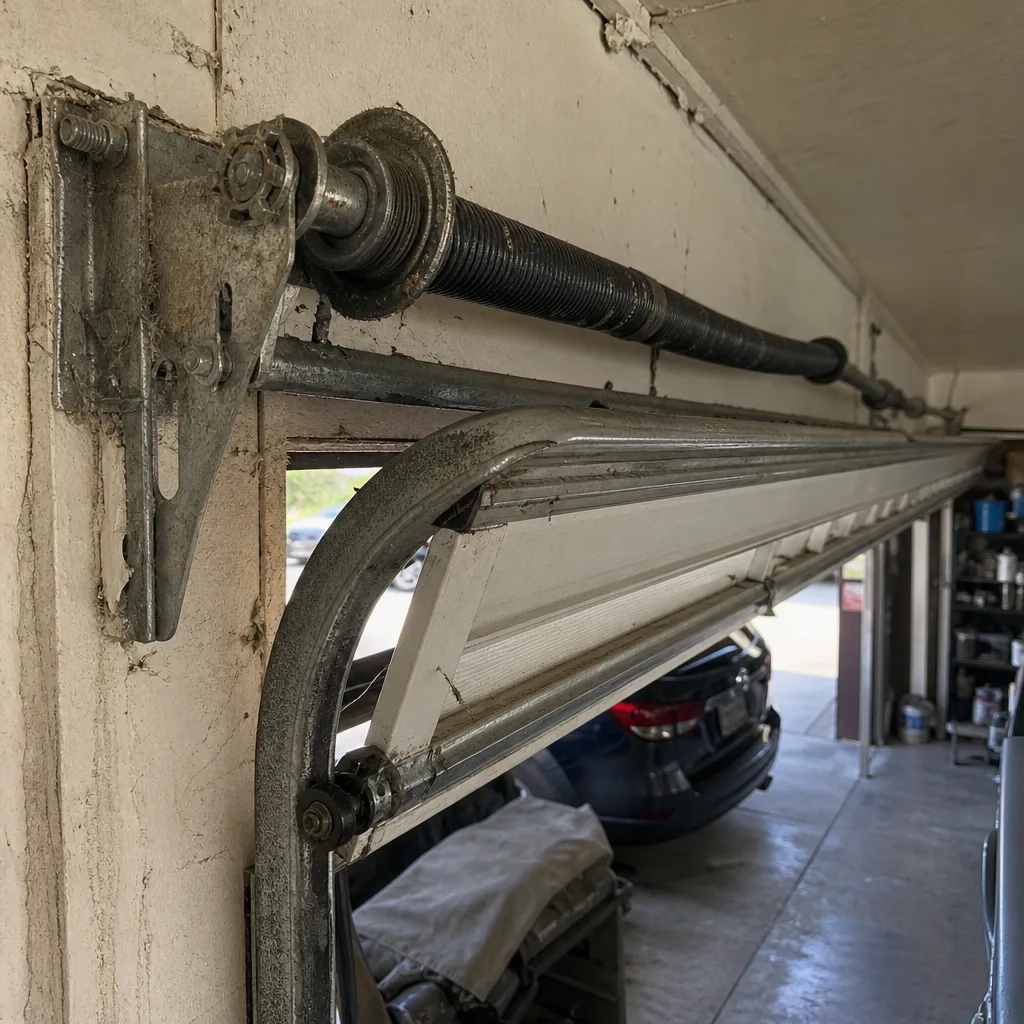
Coil separation is the earliest and most reliable visual warning sign. A healthy torsion spring has coils sitting tight against each other along its entire length. When you see gaps between individual coils – often a 1/8-inch or wider space that was not there before – the spring has begun to fatigue internally. The metal is stretching under years of repeated loading. Think of it as the spring equivalent of a fraying rope. On a Raynor door or a Craftsman door, this separation usually appears first near the center winding cone or at one end.
Rust streaking on the spring surface is the second visual cue, and in San Marcos it is particularly relevant. Rust does not just sit on the surface; it eats into the spring steel, creating microscopic stress points. A torsion spring with visible rust streaking has lost material strength. In a coastal climate like San Marcos, springs that would last 10,000 cycles in a dry inland garage may fail at 6,000 to 7,000 cycles simply because of moisture-driven corrosion. Even a spring that is not yet visibly stretched can fail early if rust has compromised the steel.
Visible gaps at the winding cone – the metal fitting at each end of the spring – indicate that the spring has slipped on the torsion tube. The spring is no longer holding its set position. This produces uneven door operation even before a full break. If you can see daylight between the cone and the spring body, the spring needs service.
One more visual cue: when the door is open, look at both springs. A healthy matched pair will show identical coil spacing and similar rust patterns. If one spring looks stretched, discolored, or separated while the other looks tight and clean, one spring has already begun to fail. Replacing a single spring of a pair is false economy. The remaining spring is the same age and has the same cycle count. We always replace springs in pairs, regardless of the brand of door they’re mounted on.
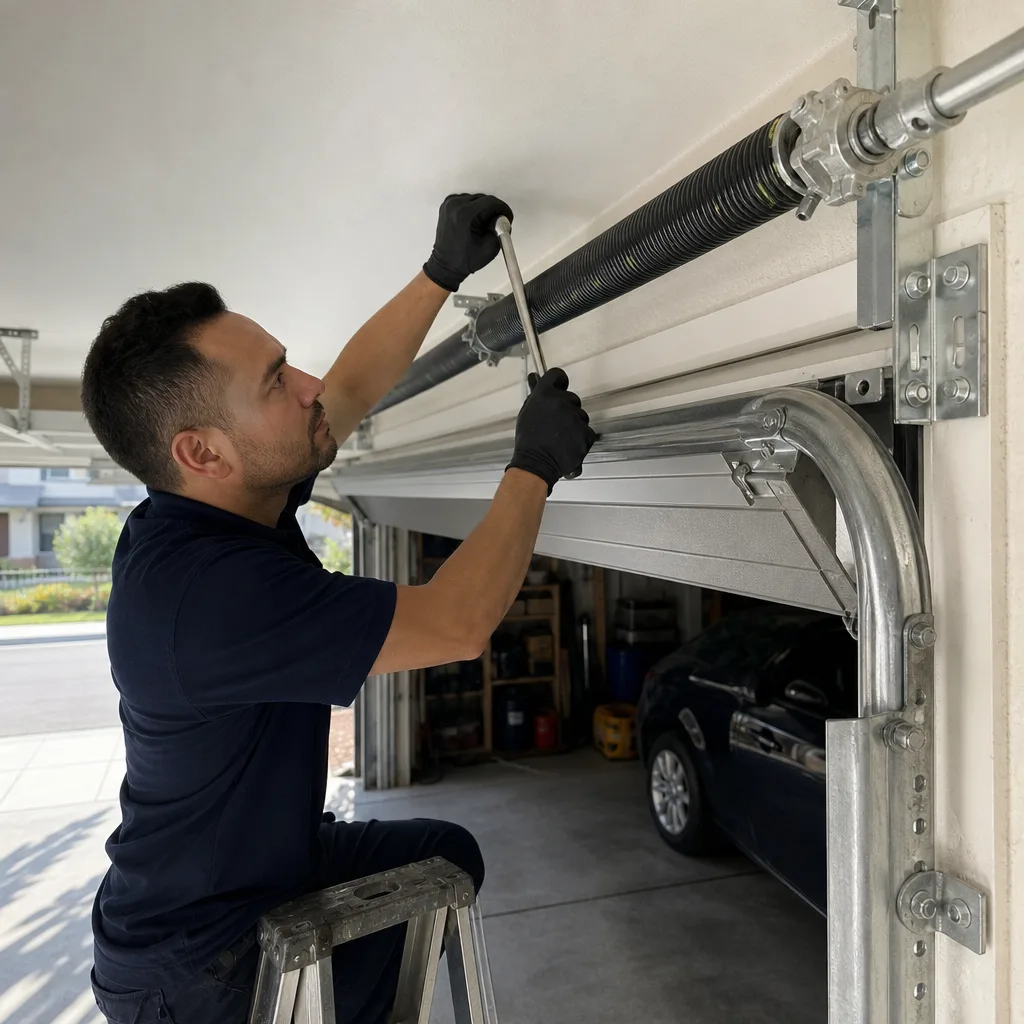
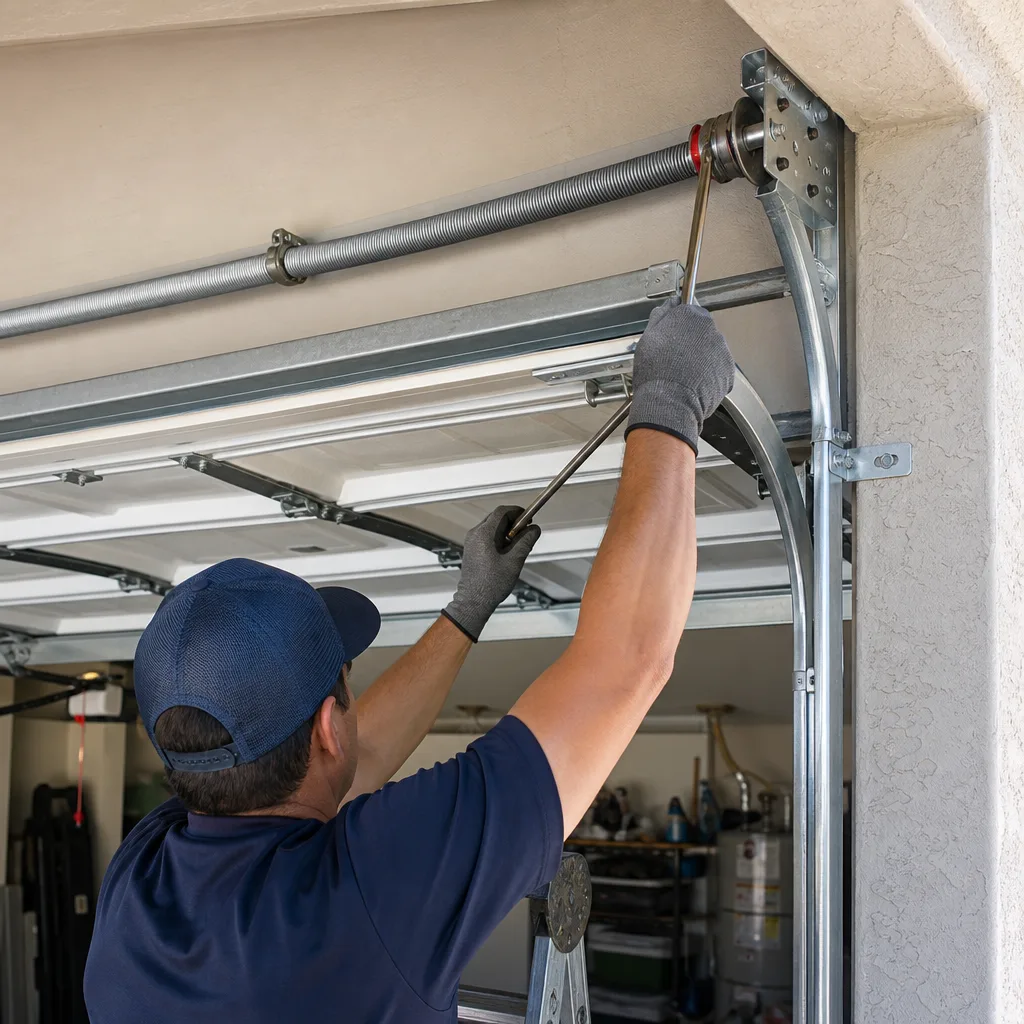
A note on safety: torsion springs under tension are dangerous. Never attempt to adjust, remove, or replace a spring yourself. The visual inspection described here is safe. Anything beyond looking requires a trained professional with the right winding bars and torque procedures.
Opener Behavior as a Diagnostic Tool
Your opener is not just a motor. It is a diagnostic instrument that reports on the health of the entire door system. Learning to read what the opener is telling you can prevent a small spring issue from becoming an opener replacement.
There are two fundamentally different opener failure modes, and they point in opposite directions:
The opener runs, but the door does not move. This is usually not an opener problem at all. The motor is spinning, the drive gear is working, but the door is not traveling. Most often, the torsion spring has broken, and the opener – sized to move a balanced door, not a dead door – cannot overcome the full weight. In other cases, the carriage disconnect has engaged, either from someone pulling the red release cord or from the carriage slipping. The diagnostic step is to disengage the opener and try the door manually. If the door is extremely heavy or falls when released, the spring has failed. If the door moves easily by hand, the opener’s carriage or drive gear is the issue.
The opener will not activate at all. No noise, no movement, no response from the wall button or remote. This indicates an electrical issue: a tripped circuit, a burnt control board, a dead motor capacitor, or a failed wall console. It is a different repair pathway entirely, and it rarely has anything to do with the door hardware itself. This is where our opener repair specialty comes in. A generalist looking at this situation might swap the whole unit. We will test the board, the capacitor, the safety sensors, and the wiring to isolate the actual failed component before recommending replacement. The opener is a system; fixing the part that failed is usually less expensive than replacing the whole assembly.
Three opener behaviors that signal door problems rather than opener problems:
- Opener labors and slows near the top of travel: Spring tension loss. The opener is doing the lifting the springs used to do.
- Opener reverses immediately after touching the floor: Down force setting too sensitive, or the door is binding on the track near the closed position.
- Opener runs but the door moves only a few inches then stops: Broken spring or a track obstruction. The opener’s force sensor is shutting it down to prevent damage.
If you have a Wayne Dalton door running a Chamberlain opener, or a Clopay door running a Genie system, the diagnostics are the same. The opener reports what the door does. We work on your brand – whatever that combination is – because garage doors are all we do. The Garage Door Opener Repair in San Clemente work we do involves the same brand-specific troubleshooting on every drive type we service.
The San Marcos Accelerator: Salt Corrosion on Cables and Brackets
San Marcos does not sit directly on the coast, but it is close enough that marine air works its way inland through the San Marcos Creek corridor and up from Carlsbad through the valleys. What homeowners see is accelerated rust on exposed metal components – particularly the ones most of us never inspect. Our Seasonal Garage Door Care for San Marcos: Year-Round Homeowner’s Guide covers how to protect these parts through each season.
The components that corrode fastest in this environment are the cable ends and bottom brackets. The bottom bracket is the metal fitting bolted to the lowest panel at each corner of the door. The cable attaches to it and runs up through the track to the torsion system. These brackets sit inches from the garage floor, where moisture collects and where road salt from your car’s tires gets deposited every time you pull in after driving on treated roads.
In another climate, a bottom bracket might last 15 to 20 years. In San Marcos, we routinely see brackets showing serious rust in half that time. The failure mode is predictable: the cable end rusts through at the attachment point, or the bracket itself corrodes to the point where the cable anchor breaks loose. When this happens, the cable whips loose and the door slams down on that corner. It is a sudden, violent failure with no warning other than the rust you did not see.
Here is how to check your own cables and brackets safely:
- With the door closed, kneel at one corner and look at the bottom bracket. You are looking for rust that has created flaking, pitting, or actual holes in the metal.
- Check the cable where it meets the bracket. Look for broken wire strands, a frayed appearance, or rust-colored staining that indicates internal corrosion.
- Run your eyes up the cable along the track. Look for any kink, flat spot, or visible wear where the cable passes around the drum.
- Repeat on the other side. A cable that is failing on one side is usually not far behind on the other.
This inspection takes three minutes. It is the single most important check a San Marcos homeowner can do between service visits. If you see fraying or significant rust on a bracket, that is the moment to call for a cable replacement, not after the door has crashed down. The Garage Door Repair in San Clemente team performs this same corrosion check on every service call, because the coastal climate there accelerates it even faster. In San Marcos, the timeline is slightly slower but no less certain.
The Warning Sign Timeline: How Long You Actually Have
Every warning sign has a runway. Some are months long. Some are days. Knowing the difference is what turns an inconvenient situation into a planned repair instead of an emergency.
Noise-only warning signs – grinding, scraping, a new hum – typically give you two to six months before functional failure. The component is wearing but still working. This is the best window for a planned repair at a standard rate rather than an emergency dispatch.
Movement warning signs – uneven lift, jerky travel, mid-cycle reversal – shorten the timeline to a few weeks. The component has degraded past the point of normal function, and every cycle adds damage. The door still works, but it is actively worsening with each use.
Spring visual warning signs – coil separation, rust streaking, cone gaps – indicate a spring that could break in the next cycle or the next hundred. There is no reliable countdown. A spring showing visible separation is a repair priority, not a watch-and-wait item.
Complete failure – a bang, a dropped door, an opener that refuses to move the door – gives you zero runway. The door is down, your car may be trapped inside, and the repair is now an emergency with associated urgency pricing.
What surprises most San Marcos homeowners is how predictable this progression is when you know what to look for. Doors do not fail from old age alone. They fail from accumulated wear on specific components, and those components announce themselves during the wear phase.
Common Mistakes to Avoid
- Lubricating a door that is making grinding noises. Grinding is a symptom of mechanical wear, not dryness. Grease can quiet the noise temporarily while the roller or hinge continues to fail underneath. You are silencing the alarm, not fixing the problem.
- Manually forcing a door that the opener will not lift. If the spring has broken, the door is now 150 to 250 pounds of dead weight. Forcing it manually risks the door falling and causing serious injury. If the door will not lift easily by hand, stop.
- Continuing to use the opener on a clearly unbalanced door. The opener is rated for a door that moves with minimal resistance. Running it against a broken or weakened spring burns out the gear assembly quickly. You are converting a spring repair into a spring repair plus an opener replacement.
- Replacing a single spring on a two-spring system. The remaining spring is the same age, has the same cycle count, and will fail soon. You will pay for labor twice instead of once.
- Ignoring rust on cables and brackets because the door “still works.” By the time a corroded cable fails, the door slams down with enough force to damage the panels, the track, and anything underneath it. The three-minute inspection is cheaper than the aftermath.
- Assuming the opener is the problem when the door is the problem. A door that is out of balance makes the opener work harder, run slower, and eventually fail. Fixing the door problem is often what saves the opener. Replacing the opener while the door problem remains means you will be back for the door problem later.
- Waiting three years between inspections because “nothing was wrong last time.” The cycle life of springs and the corrosion rate of cables are time-based, not event-based. A door that was healthy at the last inspection can develop multiple warning signs within 18 months in San Marcos conditions.
When to Call a Professional
Call a professional any time you see or hear a warning sign you cannot fully explain. The cost of a diagnostic visit is always less than the cost of the failure the warning sign predicts. Specifically: if you see coil separation or rust streaking on a torsion spring, call immediately – the spring is under lethal tension and fails without additional warning. If your cables show fraying or your bottom brackets show deep rust, call before operating the door again. If your door has become unbalanced, heavy by hand, or makes a new noise that persists for more than a week, call. If the door has already failed – a spring snapped, a cable broke, or the door will not move – call right away and do not attempt to force the door open or closed manually. San Marcos Garage Door Service home offers free estimates in San Marcos, and we will quote the repair before any work begins.
Frequently Asked Questions
The most commonly ignored warning sign is a door that becomes progressively harder to lift manually or that the opener struggles with more than it used to. Homeowners attribute this to normal aging, but it almost always means the torsion spring is losing tension. The result is a spring that snaps without additional warning, followed by a door that will not open at all. Call (877) 265-5166 if your door has become noticeably heavier or slower – a spring adjustment or replacement now prevents the full failure.
In San Marcos, addressing warning signs early typically costs between $150 and $350 depending on the component: roller replacement runs about $120 to $180, cable replacement $150 to $250, track realignment $100 to $200, and spring replacement $250 to $450 for a pair. Waiting until failure turns a $150 roller job into a $600 to $1,400 door replacement when the falling door damages panels and track. For an exact quote on your specific door, call (877) 265-5166.
Yes, visual inspection from a distance is safe. Look for coil separation, rust streaking, and gaps at the winding cones without touching anything. What you must never do is attempt to adjust, repair, or replace a torsion spring yourself – these springs hold enough force to cause serious injury. Leave any hands-on spring work to a professional.
The specific type of loud noise tells you what is failing. A bang means a torsion spring broke. A grinding noise means the rollers or hinges are worn out. A scraping sound means the track is out of alignment. A strained motor hum means the springs are losing tension and the opener is working harder to compensate. Each requires a different repair, and identifying which sound you are hearing is the first step.
Annual inspections are a good starting point for any home, but for San Marcos homes we recommend checking cables and bottom brackets every six months yourself, with a professional inspection once a year. The coastal air accelerates corrosion on metal components, and a lot can rust in 12 months. The three-minute visual check described above is the easiest way to stay ahead of it. For ongoing maintenance needs, Garage Door Installation in San Clemente follows the same inspection schedule for coastal homes there.
We work on your brand – LiftMaster, Chamberlain, Genie, Clopay, Amarr, Wayne Dalton, Craftsman, and Raynor. Our technicians are factory-familiar with all eight, which means we arrive already knowing the system on your wall. Not sure which brand suits your home? Read Choosing the Right Garage Door Brand: A Buyer’s Guide for San Marcos before you decide. Whether you have a Wayne Dalton door running a Genie opener or a Raynor door running a LiftMaster system, we service the actual combination in front of us. The right part for your system is in the truck when we arrive.
The Bottom Line
Garage doors announce their failures before they happen. The sound a door makes, the way it moves, the visible condition of springs and cables – these are diagnostic information, not quirks. A San Marcos homeowner who learns to read these signals can turn a catastrophic failure into a planned repair, a $1,400 door replacement into a $200 spring job, and a morning of chaos into a scheduled service visit. The door is already talking. Whether you listen is the variable that determines the outcome. When you hear or see something that does not seem right, call (877) 265-5166 for a free estimate. The inspection is free, and the price is quoted and agreed before any work starts. Browse our more guides & resources to keep your door running smoothly year-round.
Written by the team at San Marcos Garage Door Service, serving San Marcos since 2012.
See the difference
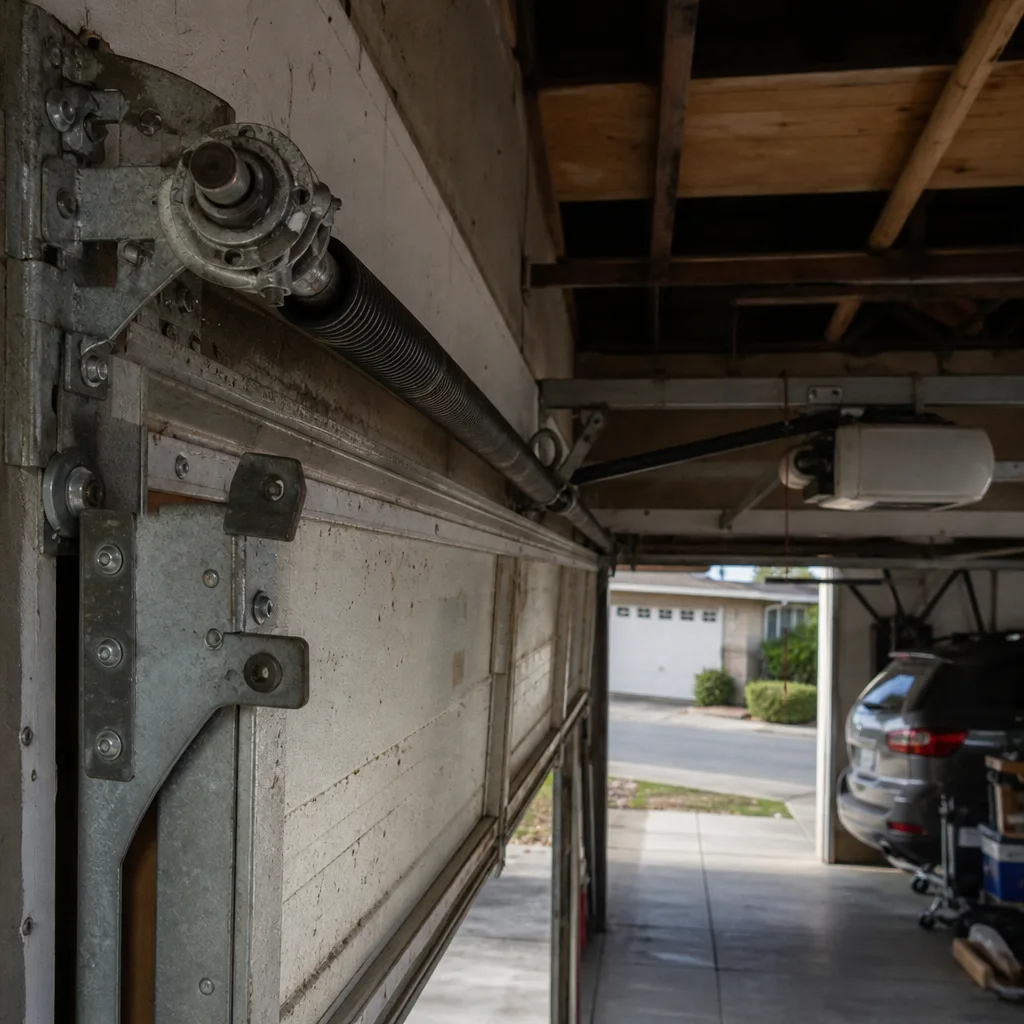 Before
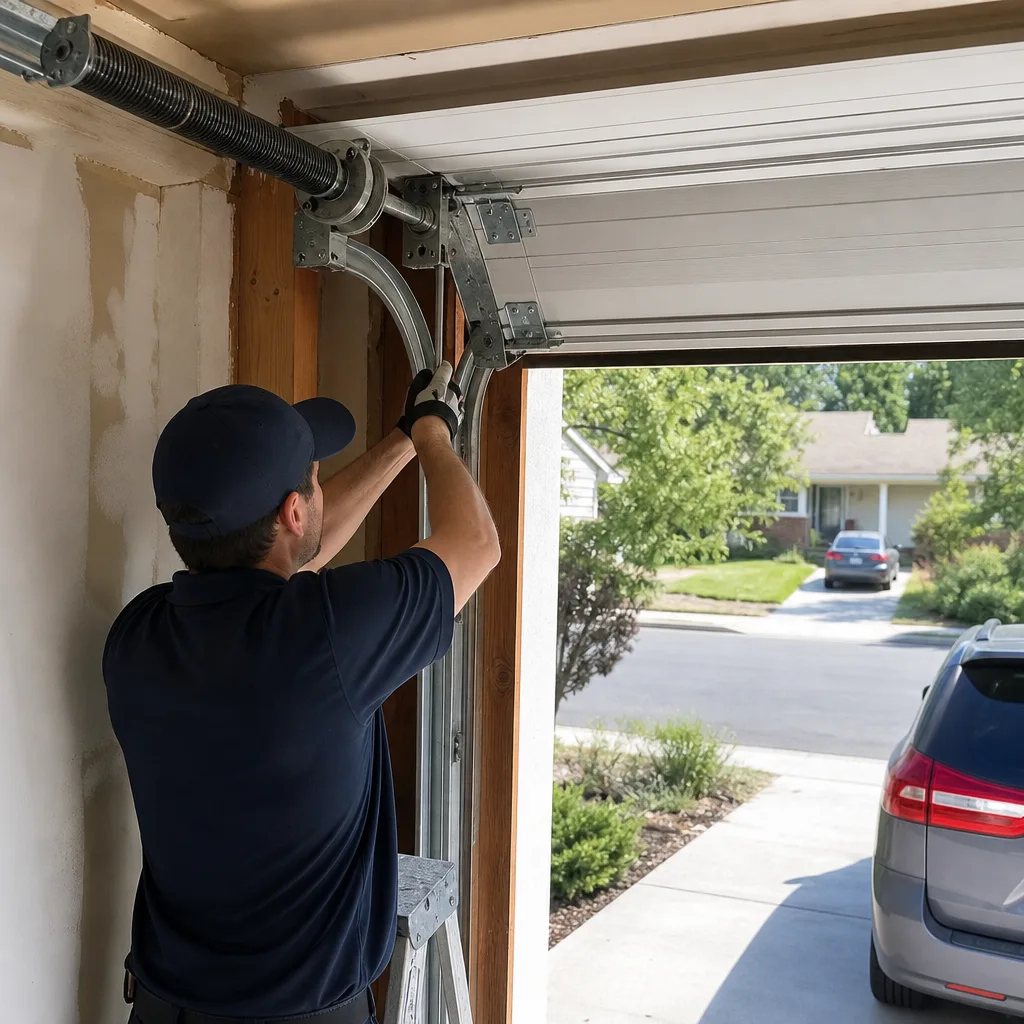 After
 Before
 After
 Before
 After